Stranger in the Frame: The Profound Gap Between How You See Your Portrait and How the World Does

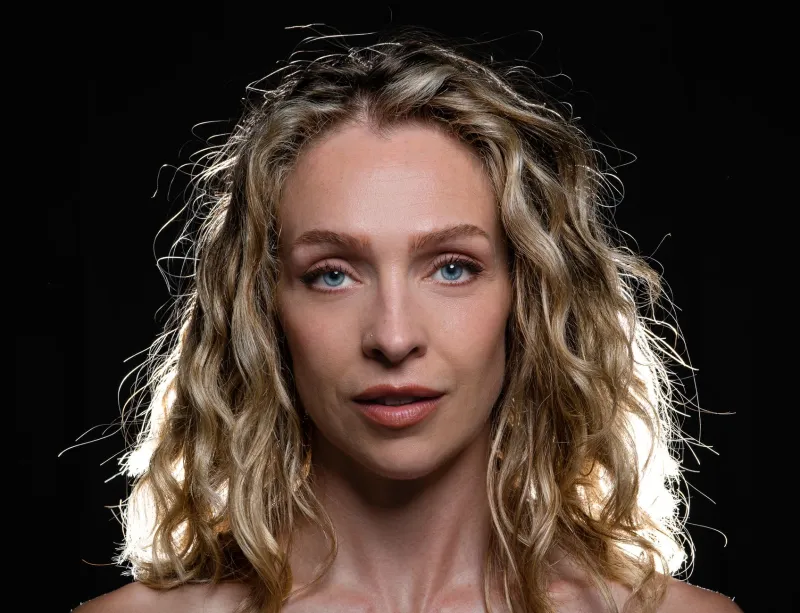
There is a particular kind of silence that settles over a studio when a client sees their professional portraits for the first time. It is not always the silence of satisfaction. Sometimes it is the silence of genuine disorientation — the quiet reckoning that comes when the person looking back from the image does not match the person who walked through the door.
That silence is data. And for anyone serious about personal branding, it may be the most important information they will ever receive.
The Mirror Has Been Lying to You
For most of your life, you have encountered your own face in reverse. The mirror flips your image horizontally, presenting a version of you that no one else has ever seen. Photographs, by contrast, show the world what everyone else observes — the asymmetries your brain has quietly compensated for, the habitual tilt of your chin, the particular way your eyes settle when you are trying to appear composed.
Research in social psychology has consistently demonstrated that people rate their own mirror image as more attractive than their photographed image, precisely because familiarity breeds preference. We have logged thousands of hours with our reflected selves. The photograph, to our own eyes, looks slightly wrong — a stranger wearing our face.
Yet to everyone else, that photograph is the most accurate version of you they have ever encountered. The disconnect is not trivial. It shapes every professional impression, every first contact, every moment someone Googles your name before deciding whether to hire you, collaborate with you, or trust you.
What Others Actually See
When a prospective client, employer, or collaborator encounters your portrait, they are not engaging in the same internal negotiation you are. They are not cross-referencing against a mental archive of how you looked at thirty-two, or remembering the version of you from a decade ago that you still privately believe represents your truest self.
They are reading a single image with remarkable speed and confidence. Studies in first-impression formation suggest that people draw conclusions about competence, warmth, and trustworthiness from a face in as little as one hundred milliseconds. Your portrait either supports the professional narrative you are trying to build — or it quietly contradicts it before you have spoken a single word.
This is why the gap between self-perception and external interpretation is not merely a psychological curiosity. It is a strategic variable with measurable professional consequences.
The Transformative Moment in the Studio
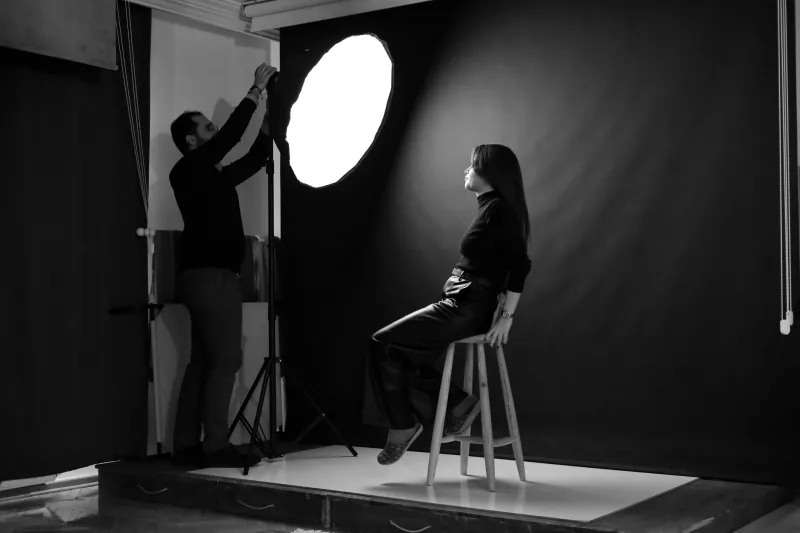
At Portraits & Co., we have observed this dynamic play out hundreds of times across our client work. The moment a subject steps outside their own self-perception and genuinely considers what a stranger would read in their image is frequently the moment the real work of visual identity begins.
Clients often arrive with a fixed idea of what they want to project — authority, approachability, creativity, gravitas. What they discover, when they examine their portraits through a more objective lens, is that the image they have been presenting to the world communicates something subtly different from what they intended. A posture that feels confident in the body reads as guarded on camera. An expression that feels warm internally registers as distracted externally.
These are not failures. They are revelations. And they are only available to those willing to borrow another person's perspective.
Borrowing the Stranger's Eye
So how does one actually practice seeing oneself as others do? There are several approaches that prove genuinely useful, both before and after a portrait session.
Seek unguarded reactions. When sharing a new portrait with trusted colleagues or mentors, ask not whether they like it, but what three words come to mind in the first ten seconds. The answers are frequently illuminating and occasionally surprising. People who care about you will tell you the portrait looks great. People who are being strategically useful will tell you what it actually communicates.
Remove the context you carry. You know the story behind every image of yourself — the nerves before the session, the outfit you almost did not wear, the moment you thought you blinked. None of that narrative is available to the viewer. Try, as an exercise, to look at your portrait as if it were an image of someone you had never met. What do you assume about that person's profession? Their personality? Their level of confidence? That exercise, practiced honestly, tends to close the perception gap faster than any other method.
Audit your existing digital presence. Pull up your LinkedIn profile, your professional website, your most recent speaking bio photo. View each image on a device you do not ordinarily use, in a browser where you are not logged in. The slight unfamiliarity of the context can help you see the image more as a stranger would. Notice what each portrait implies about where you are in your career — and whether that implication is accurate.
Why the Gap Is Also an Opportunity
It would be easy to frame the self-perception gap purely as a problem to be solved — a cognitive distortion standing between you and an accurate self-image. But there is another, more generative way to understand it.
The gap is, in fact, where the most powerful personal branding work happens. Because the version of you that others see when they encounter your portrait is not fixed. It is shapeable. Through deliberate choices in composition, lighting, expression, wardrobe, and context, a skilled portrait photographer and stylist can help you close the distance between who you are and what the world perceives — or, more precisely, bridge the gap between your interior identity and its outward legibility.
This is the core promise of professional image curation: not to manufacture a false version of you, but to ensure that the true version of you is actually visible to the people who need to see it.
Seeing Yourself Clearly Enough to Be Seen
There is a certain courage required in this process. Genuinely examining how others perceive your image demands a willingness to set aside the self-protective narratives we all carry — the belief that we look younger than our portraits suggest, more approachable than our resting expression communicates, more dynamic than a static image can convey.
But the professionals who invest in that honest reckoning consistently emerge with something more valuable than a flattering photograph. They emerge with a visual identity that functions — one that does the work of introduction, credibility, and connection before they ever enter a room.
The stranger looking back at you from that portrait is not an adversary. They are the version of you the world is waiting to meet. The question is simply whether you are willing to make that introduction intentional.