One Person, Many Stages: The Strategic Logic of Showing Up Differently Across Platforms

There is a particular kind of discomfort that arises when someone who knows you professionally stumbles onto your personal Instagram. The polished headshot they associate with your name suddenly gives way to candid weekend photographs, artistic self-portraits, or images that carry an entirely different emotional register. The reaction—on both sides—is often a quiet, involuntary recalibration.
This moment of recalibration is not a failure of branding. It is, in fact, evidence that you are doing something right.
The assumption that a single, unified visual identity must travel seamlessly across every platform is one of the more persistent myths in contemporary personal branding. It conflates consistency with rigidity, and authenticity with transparency. In practice, the most compelling professionals, creatives, and entrepreneurs have always understood something more nuanced: context shapes meaning, and the image that serves you in one arena may actively undermine you in another.
Why Platforms Are Not Interchangeable Stages
LinkedIn, Instagram, a personal portfolio site, and a professional speaker page are not simply different distribution channels for the same content. They are distinct social contracts, each carrying its own set of audience expectations, cultural norms, and interpretive frameworks.
On LinkedIn, your audience arrives with a specific lens already in place. They are assessing competence, credibility, and professional fit. The visual language they expect—and respond to—is one that signals authority, approachability within a professional context, and clarity of purpose. A well-executed headshot, clean background, and deliberate wardrobe choice communicate fluency in the codes of your industry.
Instagram operates under an entirely different set of assumptions. Audiences there are not evaluating your qualifications; they are deciding whether they find you interesting, relatable, or aspirational. The visual grammar that earns trust on that platform tends to reward texture, personality, and a sense of lived experience. A formal headshot dropped into an Instagram grid can feel as incongruous as wearing a suit to a backyard cookout.
Recognizing this distinction is not a form of deception. It is the same social intelligence that allows a person to speak differently in a boardroom than at a dinner party—without being any less themselves in either setting.
The Coherence Beneath the Contrast
What separates a strategically layered visual identity from a fragmented or incoherent one is not uniformity of presentation—it is consistency of underlying character.
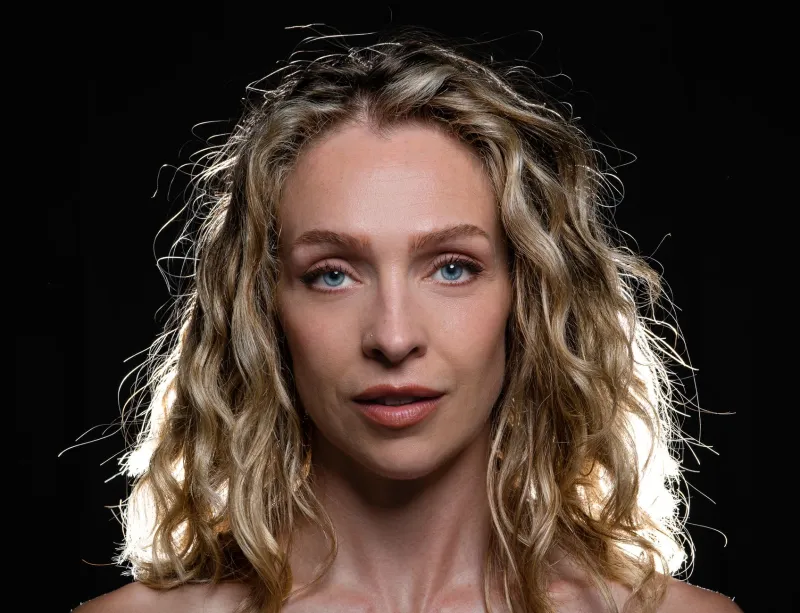
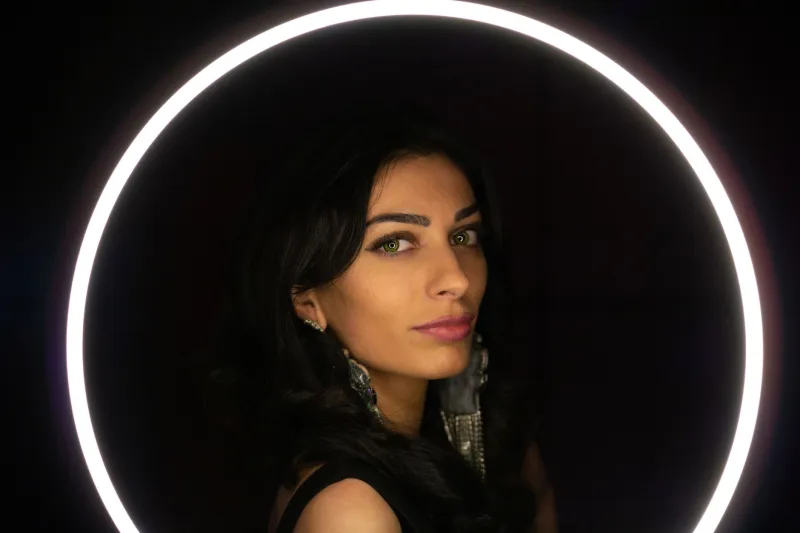
Think of a well-regarded creative director whose LinkedIn features a composed, studio-lit portrait in a tailored blazer. Her Instagram, by contrast, is filled with process shots, travel imagery, and unguarded behind-the-scenes moments from her work. The photographs look nothing alike. Yet anyone who follows both accounts will notice that the same sensibility threads through everything: an eye for composition, a commitment to intentionality, a refusal to be careless. The images differ in register, but they share a signature.
This is the framework worth building toward. The question is not which version of yourself is the real one—it is what core qualities do you want to remain legible across every context, regardless of how the surface presentation shifts?
At Portraits & Co., this is work we approach with considerable deliberateness. A portrait session designed for a LinkedIn refresh looks and feels categorically different from a creative editorial shoot intended for an artist's Instagram or portfolio. The subject is the same person. The intent, the styling, the lighting, and the emotional tone are calibrated for entirely different audiences and entirely different purposes.
The Risk of Forced Unification
There is a temptation, particularly among professionals who have absorbed a great deal of branding advice, to insist on absolute visual consistency across every platform. The reasoning is understandable: consistency signals reliability, and a fractured image can read as confusion.
But forced unification carries its own risks—ones that are less frequently discussed.
When a personal brand is so tightly controlled that it allows no variation across contexts, it can begin to feel inert. Audiences on personality-driven platforms like Instagram are extraordinarily sensitive to the absence of humanity. A feed that reads as a corporate press release, regardless of how polished it may be, tends to generate passive scrolling rather than genuine engagement.
Equally problematic is the reverse error: importing the casual, unfiltered aesthetic of a personal platform into professional spaces where it creates friction rather than connection. A headshot that might perform beautifully on a creative portfolio site can appear to signal a lack of seriousness when placed in a context where institutional credibility is the primary currency.
The goal, then, is not to collapse all platforms into one visual register, but to understand clearly what each stage is asking of you—and to show up on each one with purposeful intention.
A Framework for Deciding Which Version of Yourself Belongs Where
Navigating this requires a few clarifying questions, each worth sitting with before making decisions about how to present yourself visually on any given platform.
What is the primary transaction happening here? On LinkedIn, the transaction is professional evaluation. On Instagram, it is cultural affinity and personality. On a speaker's bureau page, it is authority and stage presence. Understanding the transaction shapes every visual choice that follows.
Who is arriving with what expectation? Audiences carry assumptions to every platform they inhabit. A potential employer, a prospective client, a fellow creative, and a general follower all arrive through different doors. The image that greets them should be fluent in the language they already speak.
What do you need them to feel in the first three seconds? Visual identity communicates before language does. Before a viewer reads your bio, your caption, or your credentials, they have already formed an impression from the image itself. That impression should be deliberate, not accidental.
Does this image undermine or reinforce the qualities I want to be known for? This is the coherence test. If the core qualities you are building your reputation around are creativity, authority, warmth, and precision, every image you publish—regardless of platform—should be capable of carrying at least one of those qualities legibly.
Multiplicity Is Not Inconsistency
The professionals who manage visual identity most effectively are not those who have reduced themselves to a single, unchanging image. They are the ones who understand that a person of genuine depth will naturally present differently across different contexts—and who have taken the time to make each of those presentations purposeful.
A surgeon who also paints. An attorney who runs ultramarathons. A CEO who teaches cooking classes on weekends. Each of these individuals contains multitudes, and there is no reason their visual identity should not reflect that richness—provided each platform receives a version that is calibrated to its specific audience and purpose.
The narrative gap between your LinkedIn photo and your Instagram feed is not a problem to be solved. It is a reflection of the fact that you are a complete person operating in multiple worlds. The work is not to eliminate that gap, but to ensure that every image you place on every platform was chosen with the same deliberateness that defines the rest of your professional life.
That is, ultimately, what image curation means at its most sophisticated level: not presenting a single, static face to the world, but knowing—with precision and confidence—which face belongs on which stage.