Framed by Time: How the Decade You Came of Age Still Shapes Every Portrait You Take

Before you choose a backdrop, a wardrobe, or an editing style, something older and less conscious has already made a series of decisions on your behalf. It is the sensibility instilled in you during the years when your understanding of image, identity, and authenticity was first taking shape. It is, in other words, your generation — and its fingerprints are all over your portrait.
This is not a comfortable observation for those of us who prefer to think of our aesthetic choices as entirely our own. But it is, I would argue, a genuinely useful one. Understanding the generational grammar of self-presentation does not diminish individual expression. It illuminates the deeper cultural logic that runs beneath it — and in doing so, it offers each of us a clearer view of the assumptions we may be carrying uncritically into every image we create.
The Gen Z Frame: Authenticity as Aesthetic
For those who came of age in the 2010s and early 2020s, the dominant portrait philosophy is one that treats imperfection not as a regrettable byproduct of reality but as the point itself. Gen Z clients — broadly, those born between 1997 and 2012 — tend to arrive at portrait sessions with a resistance to the language of polish. They are suspicious of the overly lit, the heavily retouched, the compositionally correct.
This is not laziness or indifference. It is a coherent aesthetic position, shaped by a media environment in which the performance of authenticity became the primary currency of credibility. Having grown up watching the curated perfection of early Instagram collapse under the weight of its own artificiality, Gen Z developed a visual vocabulary that prizes the candid over the composed, the grainy over the glossy, the slightly off-center over the meticulously framed.
In portrait terms, this translates to specific and recognizable choices: natural light over studio setups, minimal makeup, clothing that communicates personal identity rather than professional aspiration, and a posing style that resists the formal and gravitates toward the incidental. The ideal Gen Z portrait looks, above all, like it happened — even when it was carefully constructed to appear that way.
What this generation is actually communicating, through these choices, is a particular theory of trust. They believe — and the data on consumer behavior increasingly supports them — that audiences are more persuaded by what appears unmediated than by what appears produced. The portrait, for Gen Z, is not a performance of the self. It is, ideally, evidence of it.
The Millennial Frame: Curated Vulnerability
Millennials — those born roughly between 1981 and 1996 — occupy a more complicated position. They are the generation that built the visual culture Gen Z is now reacting against, and yet they have also lived long enough to develop a sophisticated skepticism about the images they once embraced uncritically.
The Millennial portrait aesthetic is, at its most characteristic, a study in controlled disclosure. It acknowledges imperfection — the candid laugh, the visible laugh line, the deliberately casual wardrobe — but frames these elements within a composition that remains fundamentally deliberate. The vulnerability is real, but it is also selected. The casual moment was, in most cases, choreographed.
This approach reflects a generational relationship with identity that was formed during the rise of social media as a tool of self-construction. Millennials learned early that the self presented online was a project — something to be built, maintained, and occasionally strategically dismantled for the sake of relatability. Their portrait choices carry this sensibility: they want to be seen as human, but they also want to retain authorship over which parts of their humanity are visible.
For personal branding purposes, this translates into an aesthetic that is warm but professional, personal but intentional — a carefully balanced position that communicates both competence and approachability without fully surrendering to either.
The Gen X Frame: Strategic Minimalism
If Millennials curate their vulnerability and Gen Z performs their authenticity, Gen X — those born between 1965 and 1980 — tends to do something rather different: they edit. Aggressively and deliberately.
Gen X came of age in a media environment that was skeptical of earnestness and allergic to excess. The cultural touchstones of their formative years — the spare aesthetics of 1990s alternative culture, the ironic detachment of early indie film, the stripped-down visual language of the first digital era — all pointed toward the same conclusion: less is more, and more is suspect.
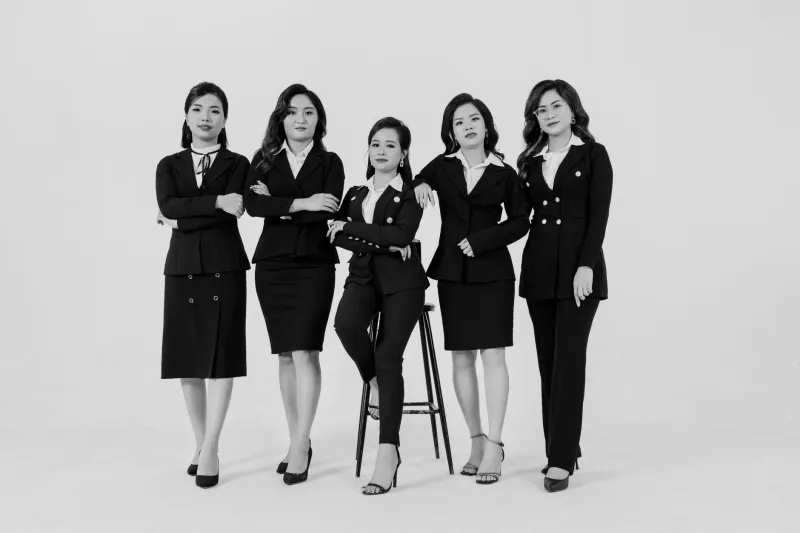
In portrait terms, this manifests as a preference for clean backgrounds, neutral palettes, restrained posing, and a general resistance to anything that reads as trying too hard. The Gen X portrait is not cold — but it is controlled. It communicates competence without requiring the audience to be impressed by it. There is a quiet confidence in this approach, a refusal to over-explain or over-present that reads, in the right context, as genuine authority.
For professionals in fields where credibility and experience are the primary selling points — law, finance, medicine, executive leadership — this aesthetic often serves extraordinarily well. It speaks the visual language of someone who has nothing to prove, which is, paradoxically, one of the most persuasive things a portrait can say.
What Your Portrait Reveals That You Didn't Intend
The practical implication of all this is both straightforward and slightly unsettling: your portrait is communicating your generational values to audiences who may or may not share them — and those audiences are reading those signals whether you intended to send them or not.
A Gen X executive who presents with strategic minimalism may read as authoritative to peers but as inaccessible to younger clients or employees. A Millennial entrepreneur whose portrait communicates curated vulnerability may resonate deeply with their own cohort but strike older, more skeptical audiences as performative. A Gen Z creative whose aesthetic prioritizes authenticity over polish may connect powerfully with their community while inadvertently signaling a lack of professional intentionality to stakeholders from other generations.
None of these outcomes is inevitable. But all of them are preventable — once you understand the generational grammar you are unconsciously speaking.
Portrait Strategy Across the Generational Divide
At Portraits & Co., we work with clients across every generational cohort, and one of the most valuable conversations we have is the one that asks: who is this image actually for? Not who do you want to be — but who do you need to reach, and what visual language do they trust?
The answer to that question should shape every decision that follows: the wardrobe, the setting, the editing approach, the posing style. Great portrait strategy is not about erasing your generational identity — it is about understanding it well enough to deploy it with intention, and to adapt it, when necessary, for the audience that matters most.
Your portrait is always, in some measure, a document of when you were formed. The question is whether you are letting that document work for you — or simply allowing it to speak without your supervision.