Mirror and Mask: Closing the Gap Between the Portrait You Project and the Person You Are

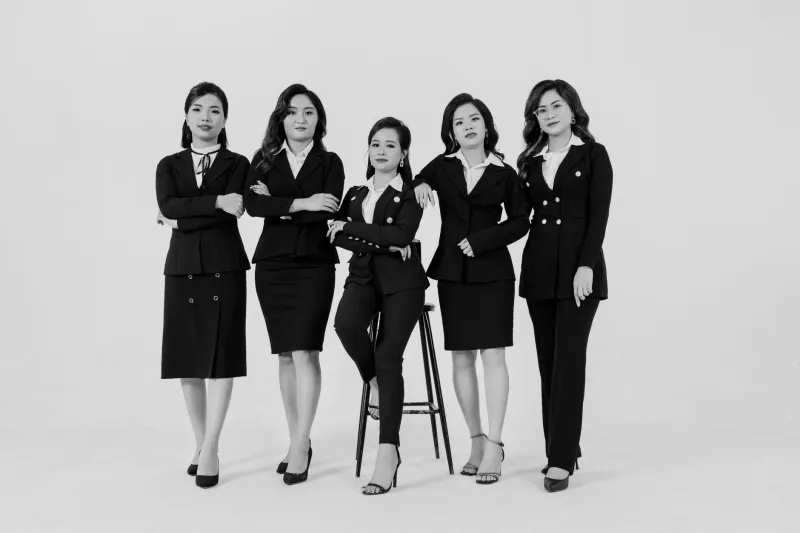
Photo by Photo by Vitaly Gariev on Unsplash on Unsplash
There is a peculiar discomfort that settles over certain professionals the moment a new headshot goes live. The photograph is technically flawless. The lighting is immaculate. The expression projects exactly the authority or approachability the session was designed to capture. And yet, something feels wrong—not with the image itself, but with the distance between it and the person standing in front of the bathroom mirror every morning.
This tension is more common than most will admit, and it carries real consequences for how professionals connect with the people they serve.
The Psychology of the Curated Self
Human beings have always managed the impressions they make on others. Sociologist Erving Goffman described this as "impression management" decades before Instagram existed, and long before personal branding became a formal discipline. What has changed is the permanence and reach of the curated image. A portrait posted to a LinkedIn profile or a company website is not a fleeting interaction—it is a fixed ambassador that speaks on your behalf thousands of times without your presence.
When that ambassador feels like a stranger, the psychological toll accumulates quietly. Clients at Portraits & Co. have described the experience in strikingly similar terms: a reluctance to share the portrait, a subtle anxiety before meetings where someone has seen the photograph first, and—most significantly—a performance pressure to "live up" to the image rather than simply show up as themselves.
This is the paradox at the heart of professional portraiture. The more polished the image, the greater the potential chasm between expectation and encounter.
Three Professionals, Three Versions of the Same Problem
Consider the experience of a Chicago-based executive coach who underwent a full personal branding overhaul in her early forties. Her portraits were striking: composed, authoritative, styled in a palette of deep navy and charcoal that communicated gravitas. Referrals increased. Speaking invitations followed. And then, in her own words, she began dreading the first five minutes of every new client relationship—the moment when the person who had studied her website finally met the woman who laughed too loudly and kept a chaotic desk.
The image had not lied, exactly. It had simply told a partial truth, and the omission was costing her the ease she needed to do her best work.
A contrasting case involves a Brooklyn-based creative director who resisted professional portraiture for years precisely because he feared the opposite outcome: that a polished image would betray the deliberately irreverent, process-driven identity he had built with his audience. When he finally commissioned a portrait session, the breakthrough came not from softening the professional standard but from incorporating visual elements—a worn denim jacket, a studio setting littered with sketches—that told the fuller story. The resulting images were both professional and unmistakably him.
A third example comes from the world of entrepreneurship, where a founder of a wellness brand in Austin found herself caught between investor-facing portraits that emphasized corporate credibility and the warm, community-oriented image her customers had come to trust. She had, in effect, created two visual identities that were beginning to contradict each other across platforms.
Why the Gap Forms in the First Place
The disconnect between portrait and reality rarely emerges from dishonesty. It emerges from the understandable impulse to present an idealized version of professional capability—to show who you are on your very best day, in your most focused and prepared state.
The problem is that "best day" energy, when it diverges too far from the everyday, reads as performance rather than presence. And audiences—whether clients, colleagues, or collaborators—are exquisitely sensitive to that distinction, even when they cannot articulate why a particular image feels slightly off.
There is also a temporal dimension to consider. A portrait session captures a single moment, but professional identity is not static. The image that felt authentic three years ago may now represent a version of yourself you have genuinely grown beyond. Holding onto it out of brand consistency can quietly communicate stagnation rather than stability.
Finding Visual Honesty Without Sacrificing Authority
The resolution to this paradox is not to abandon professional standards or to present an unedited, unintentional image. It is to pursue what might be called intentional authenticity—a portrait that is as deliberate and considered as any polished headshot, but one that incorporates the genuine textures of your professional personality.
This begins before the camera is ever raised. It begins in the conversation between photographer and subject about what the image must accomplish and what it must not falsify. At Portraits & Co., this discovery process is treated as foundational rather than preparatory. The questions that matter most are not about wardrobe or backdrop—they are about how you want to feel when you share the image, and whether the person looking back at you from the final photograph is someone you would recognize in an unguarded moment.
Practically, this often means resisting the temptation to over-style. It means choosing environments that carry genuine meaning rather than generic professionalism. It means allowing for expressions that reflect the full register of your personality, not only its most composed register.
For the executive coach in Chicago, the answer was a second session that preserved the authority of her original portraits while introducing warmth through setting and expression—her office as it actually looked, a laugh caught mid-conversation rather than a posed smile. For the creative director, it was the deliberate inclusion of visual context that told the story of his process. For the Austin founder, it was a unified visual strategy that found the honest overlap between her investor-facing and customer-facing identities, rather than maintaining two separate masks.
The Portrait as a Commitment
There is a reason the most enduring professional images feel like introductions rather than advertisements. They do not promise a performance. They offer a person.
The gap between portrait and reality is not inevitable. It is the result of a brief—conscious or unconscious—that prioritizes impression over truth. Closing that gap does not diminish the power of professional portraiture. It amplifies it, because the most compelling images are the ones that hold up across every context in which they are encountered: on a website, in a conference program, and in the moment when someone who has seen the photograph finally shakes your hand.
Where image becomes identity, the standard must be higher than mere attractiveness or authority. It must be recognition—the sense, from both sides of the lens, that the person in the portrait and the person in the room are, at last, the same.