The New Face Forward: How Reinventing Your Visual Identity Can Accelerate a Career Pivot
Career reinvention is rarely a single moment. It is a series of decisions, conversations, and quiet reckonings that accumulate over months or years before they become visible to the outside world. But there is one decision that, when made deliberately, can compress that timeline considerably: the decision to change how you look to others before the world has caught up to who you are becoming.
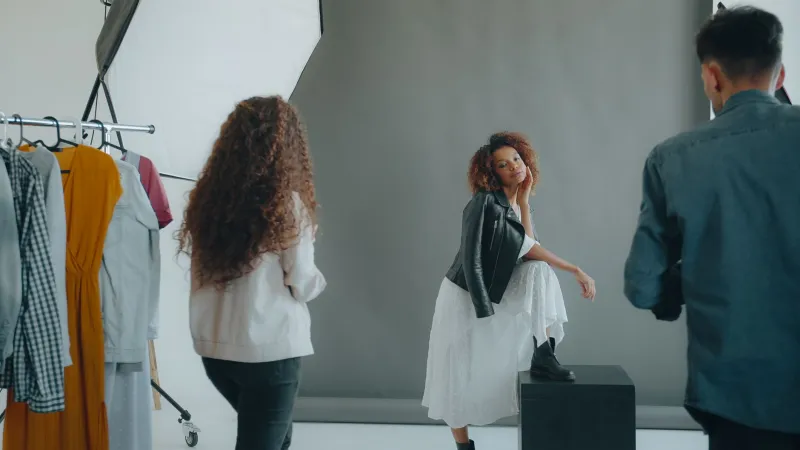
This is the work we do at Portraits & Co. — not merely photographing people, but collaborating with them at threshold moments to ensure that their image is a bridge to where they are going, not an anchor to where they have been.
Why First Impressions During Transitions Are Different
The psychology of first impressions is well-documented, but its stakes are uniquely elevated during career transitions. When a professional pivots — from corporate finance to nonprofit leadership, from medicine to entrepreneurship, from military service to tech — they are asking an audience of strangers to extend a form of social credit: to believe in a version of them that has no track record yet.
Research on social cognition suggests that people make trust assessments within the first few seconds of encountering a new face, and that those assessments are remarkably resistant to revision. For a career changer, this means the visual presentation accompanying their new identity must do significant work up front. A LinkedIn profile photograph taken during a previous professional chapter — whether it reads as too formal, too casual, or simply misaligned with the target industry — sends a signal of ambiguity at precisely the moment when clarity is most needed.
The portrait, in this context, is not decoration. It is argument.
Three Professionals Who Used Image to Lead Their Transition
From Military Officer to Tech Consultant Marcus, a 14-year Army veteran based in the Washington, D.C. area, left active duty with a logistics background and a clear vision for a career in supply chain technology consulting. What he lacked was a visual identity that spoke the language of the sector he was entering. His existing professional photographs — formal, uniformed, structured — projected authority but also communicated a world apart from the startup-adjacent consulting firms he was targeting.
His portrait session at Portraits & Co. was built around a deliberate wardrobe shift: structured but relaxed navy blazers, clean white shirts without ties, contemporary eyewear. The styling communicated competence and discipline — attributes from his military background worth retaining — while shedding the visual cues that marked him as an outsider to the tech consulting culture. Within three months of updating his LinkedIn profile and digital portfolio with the new imagery, he had secured two informational interviews that converted to consulting engagements. "People stopped asking me to explain the military thing," he noted. "They just saw someone who looked like them."
From Corporate Attorney to Creative Director Diana had spent twelve years practicing intellectual property law in New York City before deciding to pursue the creative career she had deferred — brand strategy and creative direction. The transition was professionally coherent; her legal background in IP gave her a distinctive lens on brand protection and identity. But her visual presentation was a decade of conservative suiting that telegraphed the law, not the creative industries.
Her styling consultation focused on intentional asymmetry: retaining the structural tailoring that communicated professional seriousness while introducing texture, unexpected color, and editorial accessories that signaled creative fluency. The resulting portrait suite was striking precisely because it held both identities in tension — and that tension was the story. It communicated someone who brought rigor to creativity, which was exactly the positioning she needed. She used the images to launch a personal brand website and began attracting inquiries within weeks.
From Educator to Executive Leadership Coach Renée had spent twenty years as a high school principal in the Chicago Public Schools system before pursuing certification as an executive leadership coach targeting C-suite clients. The challenge was directional: her visual identity needed to migrate from an institutional, community-service context to a high-stakes corporate one without abandoning the warmth and credibility that were her most valuable assets.
Her portrait styling centered on elevated simplicity — clean, structured silhouettes in deep jewel tones that communicated both warmth and gravitas. The session was conducted in a studio environment that projected contemporary professionalism rather than the educational settings that dominated her existing imagery. She reported that the new photographs changed how she felt walking into discovery calls. "When I looked at the images," she said, "I saw the coach I was becoming, not the principal I had been. That changed how I showed up."
The Confidence Architecture of a Curated Image
This last observation — that updated imagery changes how the subject carries themselves, not merely how they are perceived — is perhaps the most underappreciated dimension of professional portrait work. There is a documented psychological phenomenon sometimes called "enclothed cognition," in which what we wear and how we present ourselves physically influences our own cognitive performance and behavioral confidence.
A portrait session that accurately represents who you are becoming creates a feedback loop: the image reinforces the identity, the identity reinforces the behavior, and the behavior begins to produce the outcomes that validate the transition. The photograph is not merely evidence of change. For many professionals, it is the first tangible proof that the change is real.
Practical Styling Guidance by Industry Destination
For those navigating a pivot, the following directional principles offer a starting point:
Entering Corporate or Financial Services: Invest in precision. Clean lines, structured tailoring, and a restrained palette of navy, charcoal, and white communicate institutional readiness. Avoid anything that reads as casual or expressive.
Entering Creative or Marketing Industries: Demonstrate taste through specificity. A well-chosen accessory, an interesting texture, or a thoughtful color combination signals aesthetic intelligence. Avoid generic business casual, which communicates no industry fluency.
Entering Wellness, Coaching, or Nonprofit: Prioritize approachability. Warm tones, relaxed structure, and natural materials communicate authenticity and human connection. Avoid anything that reads as corporate distance.
Entering Entrepreneurship or Founding Roles: Own your distinctiveness. Your visual identity should be recognizable and repeatable — a palette and aesthetic that will anchor your personal brand across all platforms. Consistency here is currency.
Image as the First Act of Reinvention
A career pivot asks something audacious of the world: believe in a version of me you have not yet seen perform. The most effective answer to that ask is not a longer resume or a more persuasive cover letter. It is a portrait — carefully composed, deliberately styled, and precisely aligned with the identity you are stepping into.
At Portraits & Co., we believe that image is not the superficial layer of professional life. It is the opening statement. And for those standing at the threshold of something new, that statement has never mattered more.