The Rejected Frame: Why the Portrait You Dismissed May Be the One That Defines You
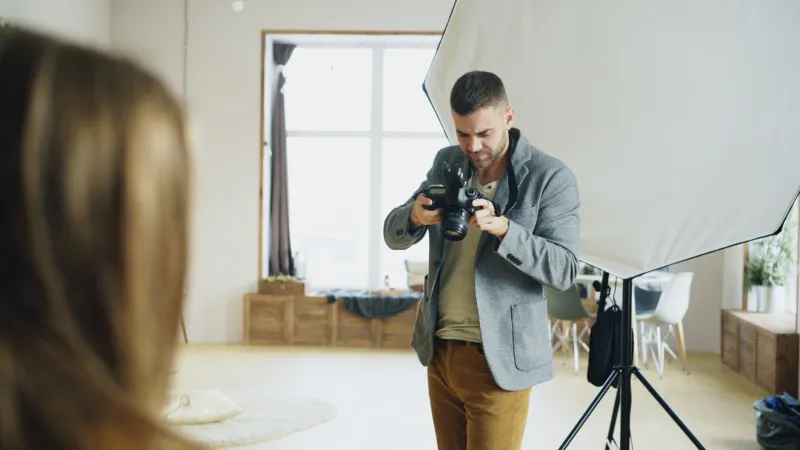
There is a particular kind of silence that falls over a portrait session the moment a client sees a frame they were not expecting. Not the silence of admiration. The silence of mild alarm. The slight tightening around the eyes, the almost imperceptible recoil, and then, almost immediately, the verdict: not that one.
It happens in studios across the country every single day. A photographer presents a contact sheet. The client moves swiftly and efficiently through the images, flagging the composed ones, the symmetrical ones, the ones where the jaw is angled just so and the expression lands somewhere between confidence and warmth. And then there are the others—the frames caught between moments, the ones where the light fell at an angle nobody planned for, the ones where something unscripted crossed the face. Those get passed over without ceremony.
But here is the question that portrait professionals have been sitting with for years: what if the rejected frame is, in fact, the most honest one?
The Self-Perception Problem
Human beings are remarkably poor judges of their own faces. This is not an opinion—it is a finding that behavioral scientists have documented with considerable consistency. We do not see ourselves the way others see us. We see a mental composite: an average assembled from thousands of glances in mirrors, filtered through memory, mood, and a lifetime of self-critique. When a portrait deviates from that internal composite, we register it as wrong, even when it is simply different.
The frames clients reject most often fall into recognizable categories. An angle that elongates rather than flatters. An expression caught mid-thought, before the social mask fully assembled itself. A moment of laughter that collapsed into something less controlled. Lighting that illuminated a texture or contour the client had trained themselves not to notice. In each case, the client's reaction is the same: this does not look like me.
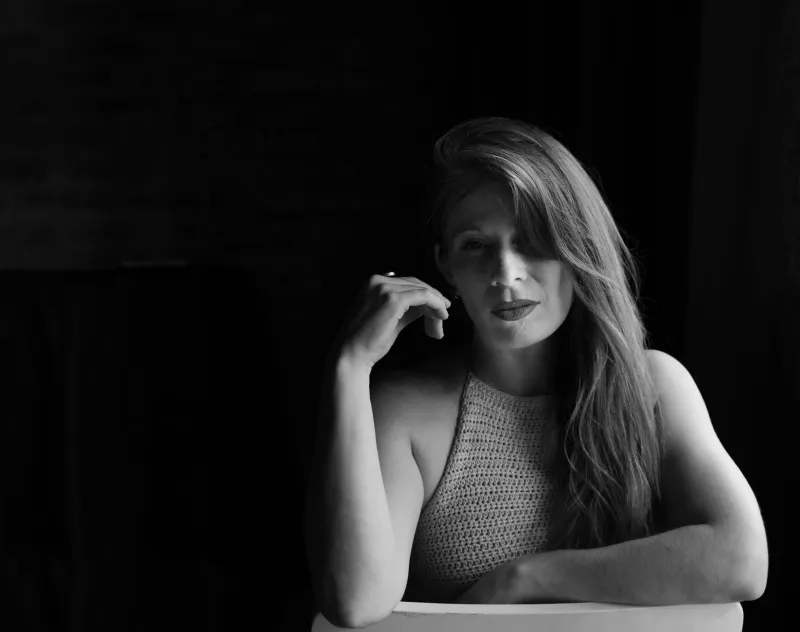
But portrait photographers will tell you something else entirely. They will tell you that those are frequently the frames where the subject actually arrives—where the performance drops and something more durable takes its place.
What the Camera Catches That We Cannot Stage
There is a physiological reason for this phenomenon. The human face operates on two largely separate systems: the voluntary muscles we consciously control, and the involuntary muscles that respond to genuine emotional states. A rehearsed smile engages the former. A real one engages both. Trained observers—and cameras, which do not flatter out of politeness—can tell the difference.
When a client reviews their portraits, they are evaluating them primarily through the lens of the voluntary system. Does this expression match what I was trying to project? Does this angle align with how I have learned to present myself? The involuntary system, the one that actually made the frame compelling, does not factor into the calculation. It is invisible to the subject, even as it is immediately legible to everyone else.
This is why portrait consultants so frequently find themselves in the position of advocating for images their clients have already mentally discarded. The photographer sees the involuntary truth. The client sees only the departure from the rehearsed ideal.
The Identity Cost of Over-Curation
In an era defined by relentless image management—LinkedIn profiles, speaker bios, media kits, brand photography—the pressure to present a perfectly calibrated visual identity has never been more acute. Professionals curate themselves with an almost editorial precision, selecting only the frames that conform to a predetermined narrative about who they are and what they represent.
The result, paradoxically, is a kind of visual anonymity. When every image is optimized, when every frame has been filtered through the same self-critical lens, what emerges is not a stronger identity—it is a blander one. The edges have been sanded down. The unexpected has been eliminated. What remains is technically correct and humanly forgettable.
The portraits that actually lodge themselves in a viewer's memory are rarely the ones that arrived polished. They are the ones that contain a small surprise—a quality of presence that could not have been engineered, a flicker of something that makes the viewer feel they have glimpsed something real. That quality almost never lives in the frames the client would have chosen for themselves.
Learning to Pause Before You Delete
The practical challenge, of course, is that most professionals do not have a portrait consultant reviewing their contact sheets alongside them. They are making these decisions alone, in the immediate aftermath of a session, still carrying the self-consciousness that the camera tends to amplify. The conditions are almost perfectly designed for poor judgment.
Several approaches have proven useful in interrupting this pattern. The first is simple: wait. Do not review portraits in the hours immediately following a session. The emotional charge of having been photographed distorts perception in ways that dissipate with time. Images that felt unbearable on a Tuesday often read entirely differently by Thursday.
The second approach involves an outside perspective—not a friend who will default to reassurance, but someone with genuine visual literacy who can articulate what a frame communicates rather than simply whether it is flattering. The question to ask is not do I look good here? but what does this image say about me? Those are not the same question, and the answers diverge in instructive ways.
The third, and perhaps most demanding, approach is to actively examine the frames you rejected and ask yourself what specifically triggered the rejection. Is it that the image communicates something false? Or is it that it communicates something true that you have not yet made peace with? The distinction matters enormously. Discarding the former is curation. Discarding the latter is erasure.
The Portraits That Last
At Portraits & Co., we work with clients across a wide range of professional contexts—executives, creatives, public figures, entrepreneurs—and the pattern holds across all of them. The images that generate the most sustained and meaningful response from audiences are rarely the ones the subject would have selected independently. They are the ones that got past the filter.
This is not an argument against intentionality in portrait photography. Craft, preparation, and thoughtful direction matter enormously. But craft creates the conditions for authentic moments; it does not manufacture them. The photographer's real skill lies in recognizing those moments when they occur—and the client's real skill lies in trusting that recognition, even when the resulting image does not match the one they had already composed in their mind.
Your visual identity is not the sum of your best-angled frames. It is the cumulative impression you make on people who encounter you across many contexts and many years. The image that makes someone feel they have actually met you—that carries some irreducible quality of you-ness—is almost certainly not the one that arrived perfectly composed. It is the one that arrived honestly.
The rejected frame is waiting. It may be the most important one you have.