No Fixed Face: The Radical Truth That Every Camera Angle Reveals a Different You
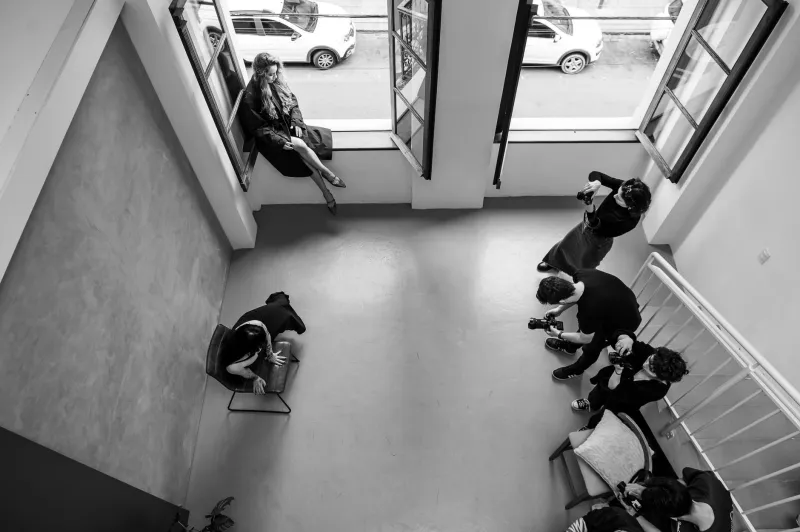
There is a moment, familiar to almost anyone who has sat for a professional portrait, when two photographers capture you in the same room, under the same light, wearing the same expression—and produce images of what appear to be two entirely different people. One rendering looks authoritative, angular, composed. The other appears warmer, rounder, more approachable. Neither photographer has made a technical error. Both have, in fact, done their jobs precisely. The divergence is not a glitch. It is the system working as designed.
Visual identity, it turns out, is not a fixed object waiting to be discovered. It is a variable outcome shaped by an intricate web of technical decisions, spatial relationships, and human interpretation. At Portraits & Co., this understanding sits at the very foundation of how we approach image curation. Before a single frame is captured, we consider the science that governs what the camera will—and will not—faithfully render.
The Geometry of Distortion
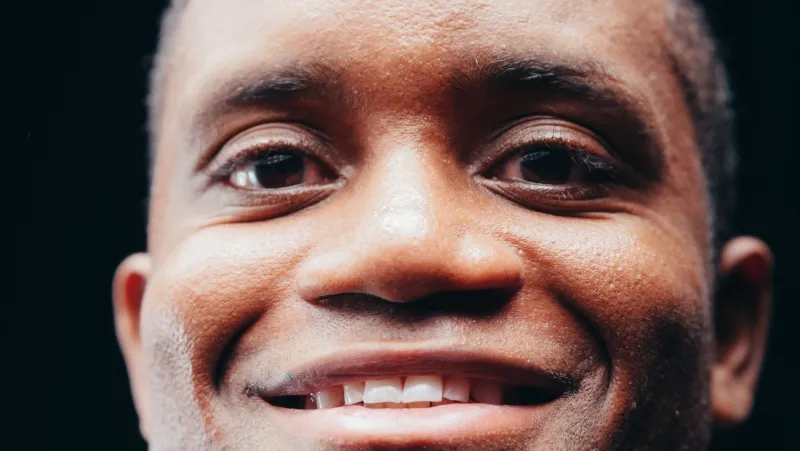
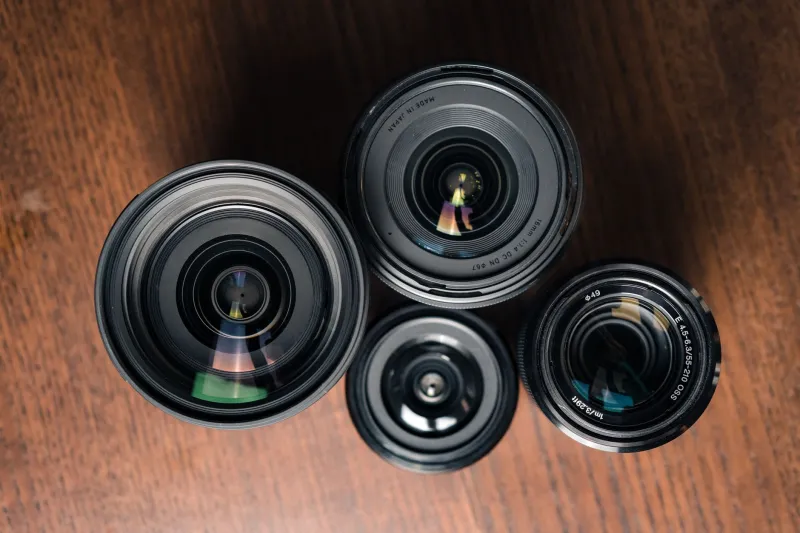
Every lens carries an inherent personality. A wide-angle lens, typically anything shorter than 50mm in full-frame terms, introduces perspective distortion that elongates features closest to the camera. Shoot a portrait with a 24mm lens at close range and the subject's nose will appear disproportionately prominent, the ears will recede, and the overall impression will skew toward the exaggerated. It is not flattering in the conventional sense, yet editorial photographers deploy this distortion deliberately—it produces a raw, confrontational energy that suits certain narratives.
Conversely, a telephoto lens in the 85mm to 135mm range compresses perspective. Features flatten slightly, the face appears more symmetrical, and the relationship between foreground and background collapses in a way that feels cinematic and refined. The same person photographed at 35mm and then at 105mm will register differently in both structure and emotional temperature. Neither image is more accurate. Both are translations.
Focal length, then, is among the most consequential decisions a portrait photographer makes—and it is a decision made before the subject has even settled into position.
The Altitude of Authority
Camera height relative to the subject's face operates on an equally powerful axis. When the lens sits below eye level and tilts upward, even marginally, it lends the subject a quality of stature. The jawline sharpens. The brow gains gravitas. This is not accidental; it is a compositional convention borrowed from classical painting, where figures of power and consequence were frequently rendered from a slightly diminished vantage point to amplify their presence.
Raise the camera above eye level, angle it downward, and the effect reverses. The eyes appear larger, the forehead more prominent, the overall impression softer and more vulnerable. Fashion photographers have long exploited this geometry to produce a particular kind of wistful intimacy. Corporate portrait photographers tend to avoid it for that very reason.
What this means practically is that a photographer who consistently shoots from a low angle will produce a version of you that reads as commanding. A photographer whose instinct is to shoot slightly elevated will render a version that reads as accessible. You have not changed. The geometry has.
The Invisible Variable: Photographer Bias
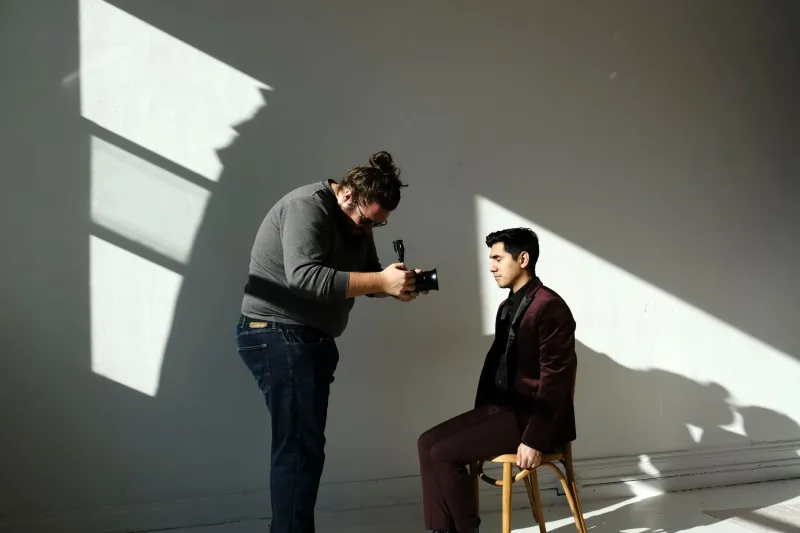
Beyond optics and positioning lies something harder to quantify but equally determinative: the subjective sensibility of the person holding the camera. Every photographer arrives at a session carrying a lifetime of aesthetic references, cultural conditioning, and personal preference. These influences shape which moment they choose to capture, how long they wait before pressing the shutter, and which frames they select when editing.
A photographer trained in documentary traditions will gravitate toward unguarded moments, micro-expressions caught between poses, the slight tension before the subject fully settles. A photographer schooled in commercial portraiture will tend toward the composed, the controlled, the deliberately constructed. Both approaches yield images of you. Neither yields you in any complete or final sense.
There is also the matter of what psychologists call confirmation bias in visual interpretation. A photographer who forms an early impression of a subject—confident, reserved, playful, intense—will unconsciously select for frames that confirm that reading. The editing process, which involves eliminating hundreds of images to arrive at a handful, is as much an act of narrative construction as it is quality control.
What This Means for Your Visual Identity
The implications for anyone engaged in deliberate personal branding or professional image curation are significant. If no single portrait constitutes a definitive rendering of who you are, then the strategic question shifts. Rather than searching for the one image that finally captures your essence, the more sophisticated pursuit becomes understanding which version of you serves which context.
The version of you rendered through a 135mm lens, shot at a slight low angle in controlled directional light, may serve a keynote speaker's website with precision. The version produced by a documentary-style photographer with a 50mm lens in a natural environment may carry exactly the warmth and accessibility your consulting practice requires. These are not competing truths. They are complementary instruments in a larger visual vocabulary.
At Portraits & Co., this is precisely how we approach the portrait process. We do not begin by asking what you look like. We begin by asking what you need your image to communicate—and then we reverse-engineer the technical and creative decisions that will produce that specific interpretation.
The Liberation of Infinite Interpretations
There is, for many people, something initially unsettling about learning that their face is not a stable, singular thing in the eye of the camera. The desire for a fixed, authentic image runs deep. We want to believe that somewhere, in the right light, with the right photographer, the camera will finally see us as we truly are.
But there is an equally compelling case for finding this multiplicity liberating. If every portrait is an interpretation, then you are never fully captured by any single image. You remain larger than any frame. The portrait that felt unflattering last year was not wrong about you—it was simply one angle among many, one moment in a particular photographer's particular vision.
Moreover, understanding the mechanics of how different angles and lenses construct different impressions grants you agency. It transforms the portrait session from a passive experience—sitting still and hoping for the best—into a collaborative, informed negotiation between subject and image-maker.
Your face, it turns out, is not the fixed point. It is the raw material from which an infinite range of visual identities can be drawn. The art lies in knowing which one to summon, and when.