Illuminated Differently: How the Light You Stand In Reshapes the Face the World Sees
There is a moment familiar to almost everyone who has sat for a professional portrait: the finished image arrives, and something feels slightly foreign. The face is yours, technically speaking—same bone structure, same eyes—and yet the person looking back carries a different quality of presence than the one you recognize in your bathroom mirror on a clear morning. The explanation is rarely the photographer. More often, it is the light.
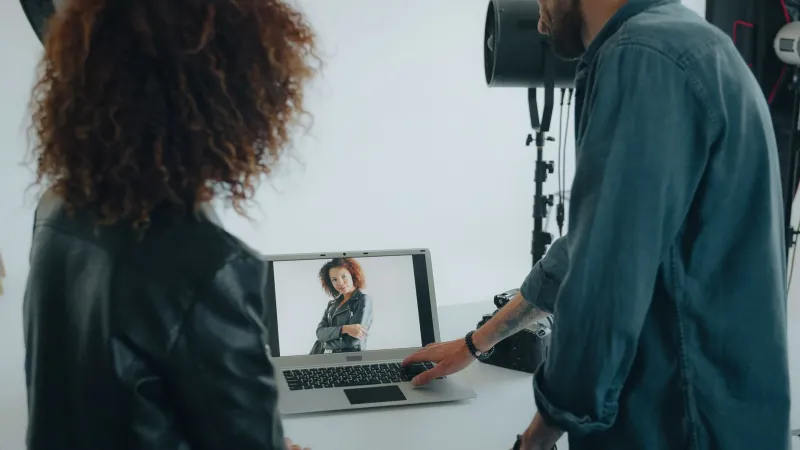
Lighting is the single most transformative variable in portrait-making, and yet it remains the element most clients think least about when preparing for a session. Color palettes, wardrobe, backdrop selection—these receive careful deliberation. The quality, direction, and color temperature of the light itself? That tends to be left entirely to the photographer. For anyone serious about managing their visual identity, that delegation is worth reconsidering.
What Light Actually Does to a Face
At its most fundamental level, light in portraiture performs two simultaneous functions: it reveals and it constructs. It reveals the physical geometry of your face—the depth of your eye sockets, the angle of your jaw, the texture of your skin. Simultaneously, it constructs an emotional and psychological impression in the viewer's mind before a single word of your biography has been read.
The human visual system is extraordinarily sensitive to light direction and quality. Soft, diffused illumination that wraps around facial contours tends to register as approachable, open, and trustworthy. Hard, directional light that casts pronounced shadows communicates drama, authority, and—depending on the angle—something that can read as either gravitas or severity. Neither quality is inherently superior. Each serves a different narrative purpose. The problem arises when the light chosen for your portrait serves a narrative that is misaligned with who you actually are or what you need your image to accomplish.
The Natural Light Advantage—and Its Limits
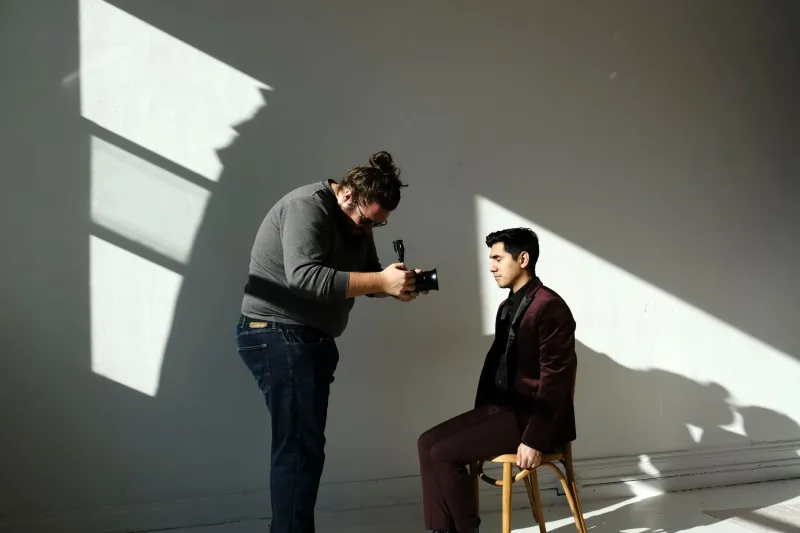
Natural light has an almost mythological reputation in portrait photography, and for legitimate reasons. Light from a north-facing window, or the soft luminosity of an overcast afternoon, produces an evenness and warmth that flatters an enormous range of complexions and facial structures. Because it shifts gradually across the face rather than striking it from a single hard point, it tends to minimize the appearance of lines and pores while preserving genuine skin texture. The result often feels more intimate, more candid—closer to the version of yourself that people who know you well actually see.
For professionals in creative fields, in client-facing service industries, or in any role where warmth and relatability are primary brand attributes, natural light portraiture frequently delivers the most resonant results. It communicates accessibility.
However, natural light is also inherently variable and, critically, uncontrollable. The color temperature of sunlight shifts from the cool blue of early morning to the amber warmth of golden hour. Cloud cover softens contrast dramatically. These fluctuations mean that natural light portraiture, while often beautiful, can be difficult to replicate consistently—a significant drawback for anyone building a cohesive visual identity across multiple platforms and touchpoints.
Studio Light as a Precision Instrument
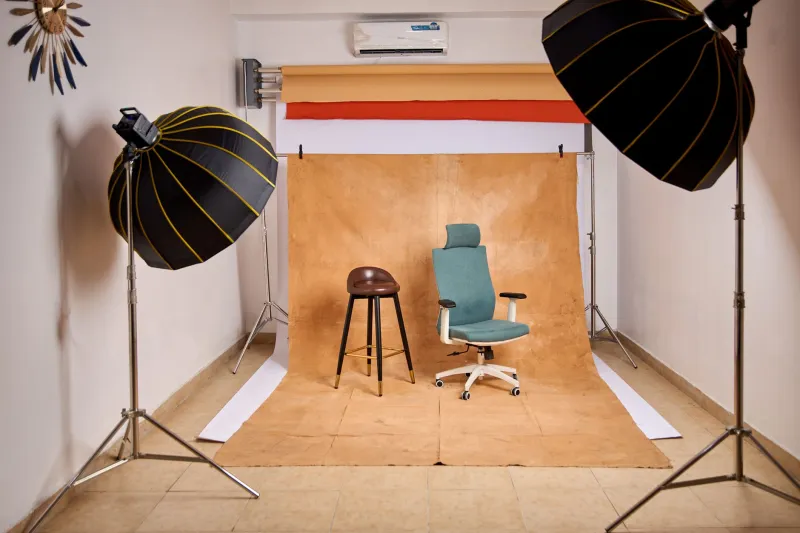
Studio lighting exists to solve the problem of variability. A skilled portrait photographer using controlled artificial light can construct virtually any quality of illumination with exact repeatability. More importantly, they can sculpt light to serve the specific contours of your face and the specific requirements of your professional context.
Rembrandt lighting—a classic studio configuration that creates a small triangle of light on the shadowed cheek—has been used for centuries in painted portraiture because it imparts a sense of depth and psychological complexity. Butterfly lighting, named for the shadow it casts beneath the nose, has long been associated with Hollywood glamour portraiture; it emphasizes cheekbones and produces a polished, elevated quality. Flat, even lighting reduces shadow almost entirely and is frequently favored for corporate headshots where clarity and accessibility are paramount.
The critical insight here is that your face has a lighting type—a configuration that most faithfully captures the version of yourself you wish to project—and that type is discoverable. It emerges from the relationship between your bone structure, your skin tone, the depth of your eye set, and the narrative purpose of the portrait itself. An experienced portrait photographer approaches this as a diagnostic process, not a guessing game.
The Digital Frontier: Video Calls and the Lighting Identity Crisis
The proliferation of remote work and virtual communication has introduced a third lighting environment that most professionals now inhabit daily: the screen. Video calls have become a primary context in which colleagues, clients, and collaborators form first impressions—and the lighting conditions of the average home office are, to put it diplomatically, unflattering.
Ring lights, positioned directly in front of the face, eliminate virtually all shadow and create an even, if slightly artificial, illumination that reads well on camera. They are inexpensive and effective. However, they also produce a distinctive catch light—a circular reflection in the eyes—that has become so associated with content creation and influencer culture that it carries its own set of unintended connotations for certain professional contexts.
A more sophisticated approach for professionals who spend significant time on camera involves positioning a larger, softbox-style light source slightly to one side and above eye level, mimicking the quality of natural window light. This produces dimensionality and warmth without the telltale ring-light signature. It is, in essence, applying studio lighting logic to the home environment—and it changes how you are perceived in every meeting.
Developing Your Lighting Literacy
Lighting literacy—the ability to recognize, seek out, and leverage flattering light in real time—is a skill that extends well beyond portrait sessions. Consider the following practical framework:
Know your color temperature response. Some complexions glow under warm, tungsten-toned light while appearing washed out under cooler, daylight-balanced sources. Others are the reverse. Pay attention to the photographs taken of you in different environments and note which color temperatures render your skin most accurately and attractively.
Understand your shadow side. Most faces have a side that photographs more powerfully than the other—this is distinct from the concept of a "good side" and relates specifically to how shadows fall. Your portrait photographer can identify this quickly; ask them to.
Audit your video call environment. Before your next important virtual meeting, take a screenshot of your own video feed and evaluate it as you would a portrait. Where is the light source? Is it behind you (creating silhouette), above you (creating harsh under-eye shadows), or in front of you and slightly elevated (creating dimension and warmth)? Small adjustments—repositioning a desk lamp, angling toward a window—can meaningfully shift how you are perceived.
Communicate with your photographer. When booking a portrait session, arrive prepared to discuss not just wardrobe and backdrop but lighting. Share examples of portraits in which you felt the light served you well. This conversation is not pedantic; it is foundational to achieving an image that genuinely represents you.
The Light Is Part of the Story
At Portraits & Co., we approach every session with the understanding that a portrait is not a passive record of a face—it is an authored statement about a person's identity, values, and professional presence. Light is not incidental to that authorship. It is, in many ways, the first sentence.
The version of you that exists in soft, north-facing window light is not more or less real than the version captured under precisely calibrated studio strobes. They are different facets of a complete identity, each suited to different contexts and different audiences. The goal of lighting literacy is not to chase a single flattering configuration and apply it everywhere. It is to understand the full range of your visual self—and to make deliberate, informed choices about which version steps forward, and when.