When the Delete Button Lies: Rediscovering the Portraits You Were Too Close to See
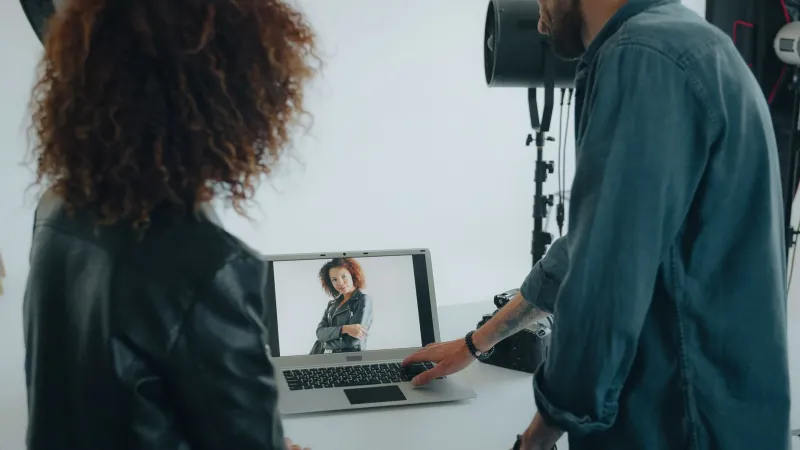
There is a particular moment that occurs in nearly every portrait session — a quiet, almost imperceptible flinch. A client scrolls through the proofs, pauses on one image, and says something like that one doesn't look like me before moving on. The photographer, meanwhile, is privately devastated. Because that image — the one already half-dismissed — is almost always the strongest frame of the day.
This is the portrait paradox: the photographs we find most uncomfortable are frequently the ones others find most compelling. Understanding why requires a brief visit to the science of how the human brain processes its own reflection.
The Mirror Problem
Most of us have spent a lifetime studying a version of our face that does not actually exist. The mirror presents a flipped image — one that has become so familiar it functions almost as a signature. When a photograph reverses that view and presents our face as the rest of the world sees it, the result feels subtly wrong, slightly foreign, occasionally alarming.
Researchers refer to this as the mere exposure effect, a psychological principle first articulated by social psychologist Robert Zajonc in the 1960s. We prefer the things we have seen most often, simply because familiarity registers as comfort. Applied to portraiture, this means the photograph that feels most correct to its subject is often the most distorted representation of how that person actually appears to others.
This is not a minor aesthetic preference. It is a neurological bias baked into the architecture of self-perception — and it has direct, measurable consequences for the choices people make about their professional and personal imagery.
What Photographers See That Subjects Miss
Experienced portrait photographers develop a particular fluency in this gap. They learn to anticipate the flinch, to protect the frames their clients will initially resist, and to build the trust necessary to reintroduce those images later in the conversation.
"The shots my clients love in the moment are usually the ones they've consciously posed for," notes one photographer who has spent more than a decade shooting executive portraits in New York. "The shots that actually get used — the ones that end up on websites, on speaking bios, in magazine profiles — are almost always the ones taken between poses. When someone is listening, or thinking, or just breathing. Those are the true frames."
This distinction between the performed portrait and the revealed portrait sits at the heart of what makes an image genuinely powerful. Audiences are sophisticated readers of visual information. They detect, on an almost unconscious level, the difference between a face arranging itself for observation and a face simply existing within a moment. The former communicates control. The latter communicates character.
And character, it turns out, is what people trust.
The Authenticity Premium
In an era saturated with curated imagery, audiences have grown remarkably sensitive to the texture of authenticity. Scroll through LinkedIn for ten minutes and the pattern becomes unmistakable: the profiles that hold attention longest are rarely those featuring the most technically perfect headshots. They belong to people whose portraits carry a quality of presence — a sense that the camera caught something genuine rather than constructed.
This is not an argument against preparation or professional styling. Quite the opposite. The most authentic portraits are almost always the product of meticulous groundwork — thoughtful wardrobe selection, considered lighting, deliberate location choices. The preparation creates the conditions in which genuine moments become possible. What it cannot do is manufacture those moments on command.
The candid frame — the one that arrives unexpectedly, often at the edges of a planned shot — frequently carries the cumulative energy of everything that came before it. The subject has relaxed into the session. The self-consciousness has softened. What remains is something closer to the person others actually encounter in a room.
That is the image worth keeping.
Retraining Your Eye
If the portrait paradox is real and measurable, the practical question becomes: how does one begin to see past it?
The most effective strategy is also the simplest — introduce a delay. Rather than reviewing portrait proofs immediately after a session, allow at least forty-eight hours before making any selections. The psychological distance that time creates is not trivial. Images that initially triggered discomfort tend to read very differently once the nervous system has settled and the reflexive self-criticism has quieted.
A second approach involves recruiting a trusted outside perspective — not necessarily a professional, but someone whose judgment you respect and who has no particular investment in flattering you. Ask them to select their three strongest images without explanation. The results are frequently instructive, and often surprising.
At Portraits & Co., we recommend a structured review process that separates the question of does this look like me from the question of does this communicate what I want to communicate. The first question is rooted in familiarity. The second is rooted in intention. For the purposes of building a compelling visual identity, only one of them matters.
The Portrait That Feels Wrong
There is a final dimension to this conversation worth acknowledging: the discomfort you feel when confronting a powerful portrait of yourself is not always a sign that something has gone wrong. Sometimes it is a sign that something has gone very right.
The images that unsettle us often do so because they reveal something true — a quality of intelligence, vulnerability, authority, or warmth that we have not yet fully claimed as our own. The portrait becomes a mirror of a more complete self, and that can feel destabilizing before it feels empowering.
This is, in its way, the most important argument for professional portrait work. A skilled photographer does not simply document how you look on a given afternoon. They create the conditions in which you might encounter a version of yourself that is more fully realized than the one you carry around in your daily imagination.
The image you almost deleted? Look again. It may be the one that introduces you most honestly to the world — and most usefully to yourself.
Portraits & Co. offers portrait sessions designed to close the gap between self-perception and authentic visual presence. Learn more at portraitsandco.com.