Caught in a Fraction: Why the Unguarded Millisecond Outlasts Every Rehearsed Expression
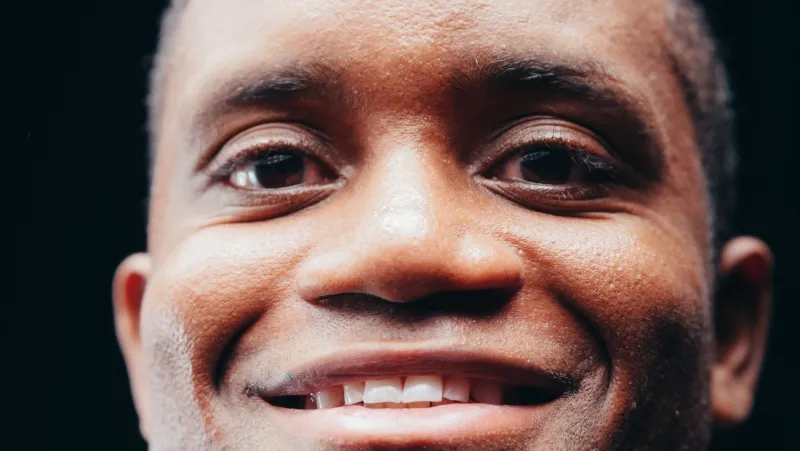
There is a moment in every portrait session that most clients never notice. It arrives between poses, when the photographer says something unexpected, or when the subject glances briefly away from the lens. In that narrow sliver of time—often no longer than one-fifth of a second—the face does something extraordinary: it tells the truth.
These involuntary flashes of genuine emotion are known as microexpressions. First studied systematically by psychologist Paul Ekman in the 1960s, they were originally catalogued in clinical and forensic contexts as indicators of concealed feeling. Today, portrait photographers and personal branding specialists across the United States are borrowing from that science, recognizing that the most compelling images are rarely the ones taken when a subject is fully composed. They are the ones taken in the instant just before.
The Neuroscience Behind the Flicker
Microexpressions occur because two distinct neurological systems govern facial movement. Voluntary expressions—the ones we consciously construct for photographs—are controlled by the motor cortex, the region of the brain responsible for deliberate action. Involuntary emotional responses, however, originate in the limbic system, a far older and faster part of the brain that operates beneath the level of conscious control.
When genuine emotion arises, the limbic system fires first. What follows is a cascade of muscular activity that the subject cannot fully suppress, even when they are actively attempting to project calm professionalism or a practiced smile. The result is a brief, unfiltered signal—a flash of delight, uncertainty, warmth, or resolve—that the camera can capture before the motor cortex reasserts its authority.
For portrait photography, this is not merely an interesting footnote from neuroscience. It is a practical and powerful tool. The face that appears in that unguarded moment carries an authenticity that no amount of coaching can replicate. Viewers respond to it viscerally, often without understanding why one image feels more compelling than another. The answer, in many cases, is that one image caught the truth.
Why Polished Is No Longer Enough
For decades, the professional headshot operated under a single aesthetic directive: look your best. That meant controlled lighting, a confident posture, and a composed expression calibrated to project competence and approachability. These remain valid goals. But the cultural landscape has shifted considerably.
American audiences—whether scrolling through LinkedIn profiles, evaluating a consultant's website, or assessing a creative professional's portfolio—have grown increasingly sophisticated at detecting what might be called performed authenticity. A smile that is too consistent, an expression that never wavers across a dozen images, a face that appears to have been arranged rather than felt: these subtle signals register as inauthenticity, even when viewers cannot articulate precisely why.
The rise of long-form content, documentary-style branding, and social media cultures that reward vulnerability has accelerated this shift. Audiences are no longer simply looking for someone who appears credible. They are looking for someone who appears real. And microexpressions, precisely because they cannot be manufactured, are among the most reliable indicators of that realness.
Reading the Room: What These Moments Actually Communicate
Not every microexpression serves the same purpose in a portrait context. A flash of genuine amusement—the kind that briefly lifts the outer corners of the eyes and creates a momentary asymmetry in the smile—conveys warmth in a way that a posed grin simply cannot. A flicker of focused intensity, caught in the fraction of a second before a subject settles into a more neutral expression, signals intellectual engagement and depth.
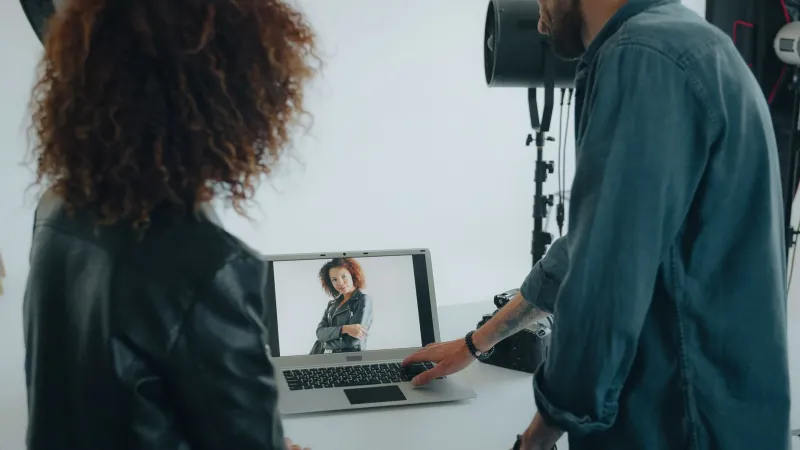
Even expressions that might seem unflattering in isolation—a brief shadow of seriousness, a fleeting moment of contemplation—can read as strength and substance when captured at the right instant. The key distinction is between an expression that reveals character and one that merely records discomfort. A skilled photographer understands the difference and edits accordingly.
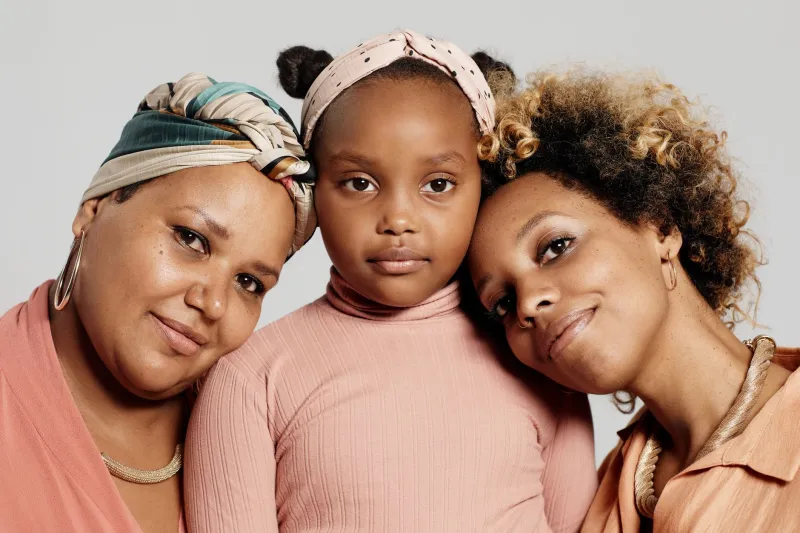
What these images share, regardless of the specific emotion they capture, is a quality of presence. The subject is not performing for the camera. They are, for one unguarded moment, simply existing within it. That distinction is what audiences feel when they encounter a portrait that stops them mid-scroll.
Creating the Conditions for Authenticity
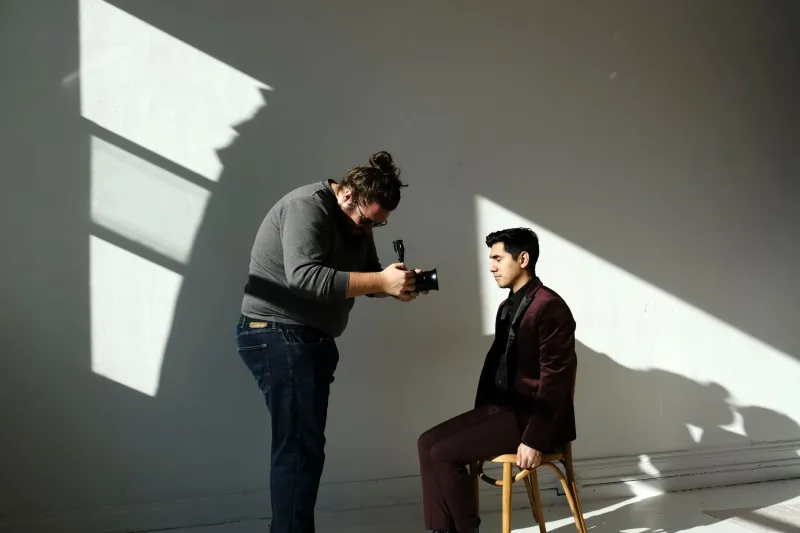
The practical challenge, of course, is that microexpressions cannot be requested. Asking a subject to "look authentic" produces precisely the opposite result—a self-conscious approximation of naturalness that reads as awkward rather than genuine. The photographer's role, therefore, is less about direction and more about environment.
Several approaches reliably create the conditions in which genuine moments arise. Extended conversation before and during a session allows subjects to relax below their social threshold—that level of self-awareness that keeps the performance face in place. Questions that require genuine thought, rather than rehearsed answers, produce real cognitive engagement that registers visibly on the face. Unexpected humor, genuine compliments, and moments of shared observation all serve similar functions.
For clients preparing for a portrait session, the most valuable preparation is counterintuitive: stop rehearsing your expression and start thinking about what you actually want to communicate. Arrive with a sense of purpose rather than a mental image of how you should look. Trust that a photographer who understands microexpression work is not trying to catch you off guard in an unflattering way—they are trying to catch you in a true one.
The Portrait That Does the Work You Cannot
In personal branding, one of the most persistent challenges is the gap between how a professional understands their own value and how they are able to communicate it to others. Credentials can be listed. Testimonials can be gathered. But the immediate, intuitive sense that someone is trustworthy, capable, and genuinely engaged—that is far harder to convey through words alone.
A portrait that captures a genuine microexpression closes that gap in a way that few other tools can. It does not tell the viewer that you are warm; it shows them the warmth itself, flickering across your face in a moment you did not stage. It does not assert that you are serious about your work; it reveals the focused intensity that surfaces when you are thinking about something that genuinely matters to you.
This is the quiet power at the center of microexpression-aware portraiture. The image becomes not a representation of how you wish to be seen, but a record of how you actually are—at least for one extraordinary fraction of a second.
At Portraits & Co., we believe that the most enduring visual identities are built not on surfaces but on substance. The face you present to the world is most powerful when it is, at its core, your own. And sometimes, the truest version of that face appears only when you are not quite looking.