The Invisible Architecture of a Great Portrait Session
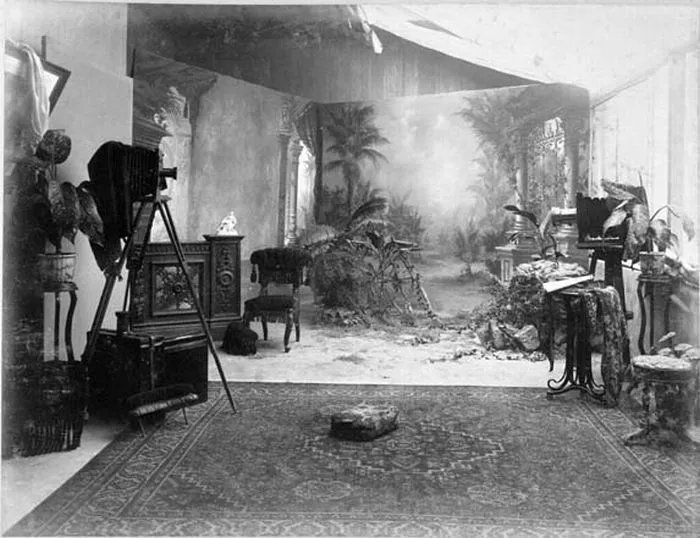
Photo: Stafhell & Kleingrothe (Fotostudio). niet bekend / unknown (Fotograaf/photographer)., CC BY-SA 3.0, via Wikimedia Commons
Most people who have sat for a professional portrait remember the experience as something that simply happened to them. The photographer said a few things. Some lights went off. At some point, the session ended. Later, when reviewing the images, a particular frame appeared — composed, alive, unmistakably them — and the subject found themselves wondering how it came to exist.
The answer is rarely luck, and it is almost never the result of the subject's own deliberate effort. What produces that frame is an elaborate, largely invisible system of influence that the photographer has spent years developing and refining. Understanding how that system works does not diminish its results. If anything, it deepens the value of the collaboration — because knowing what your photographer is doing allows you to participate in it more fully.
The Session Begins Before the First Frame
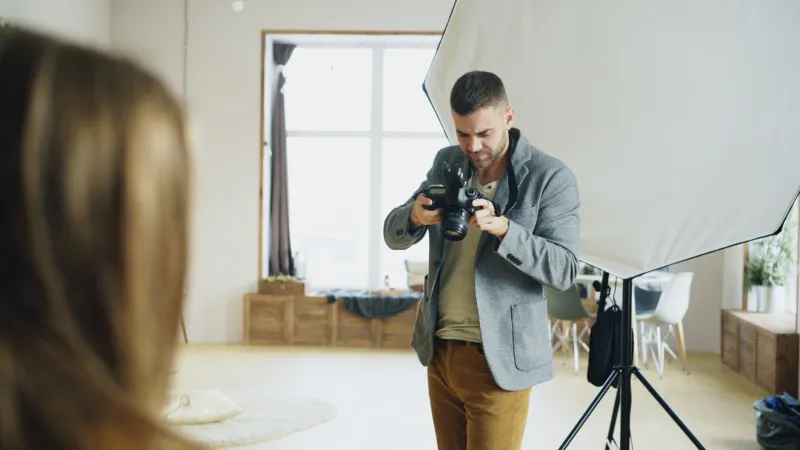
The most consequential work a portrait photographer does often happens before the camera is raised. The physical environment of the studio — its temperature, its ambient sound, its spatial arrangement — is not accidental. Each element is calibrated to produce a specific psychological state in the subject.
Studios that favor warmer ambient temperatures tend to produce subjects who are physically relaxed, their muscles less contracted, their posture slightly more open. Background music, when used, is typically selected not for the photographer's preference but for its effect on the subject's nervous system. Slow-tempo instrumental music has been shown to reduce physiological markers of anxiety; a photographer who understands this may play something low and unhurried during the early part of a session, shifting the tempo subtly as the session progresses and the subject becomes more comfortable.
Conversation serves a similar function. Experienced photographers are skilled conversationalists not because they are naturally gregarious but because conversation is one of the most effective tools available for displacing self-consciousness. When a subject is genuinely engaged in a discussion — about their work, their family, a recent experience, a strongly held opinion — their face stops performing and starts communicating. The expressions that emerge in those moments are the ones that make great portraits.
Lens Choice as a Form of Direction
The technical choices a photographer makes are also, in a meaningful sense, directorial choices — and none more so than lens selection. The focal length of the lens used for a portrait has a profound effect on how the subject's face is rendered, and by extension, on how the subject is likely to be perceived.
Wide-angle lenses, used at close range, exaggerate the relative size of features nearest to the camera — the nose, the forehead, the chin — producing a distortion that can feel unflattering and uncomfortable. Most portrait photographers avoid this for this reason. Longer focal lengths, typically in the 85mm to 135mm range for traditional headshots, compress the apparent depth of the face, rendering features in a more proportionally flattering relationship. They also allow the photographer to work at a greater physical distance from the subject, which itself has a psychological effect: many people find it easier to relax when the camera is not immediately in their personal space.
Some photographers use an even longer focal length — 200mm or beyond — for certain portrait styles, particularly when they want to capture a subject who is not yet aware that the "real" shooting has begun. At this distance, the subject may be adjusting their collar, glancing off to the side, or settling into a moment of genuine stillness. These are often the frames that feel most alive.
Spatial Positioning and the Direction of the Gaze
Where the photographer stands in relation to the subject is another variable that is rarely discussed but consistently consequential. A camera positioned slightly above eye level tends to produce images in which the subject appears composed, thoughtful, and accessible. A camera at eye level creates a sense of direct engagement, of equality between subject and viewer. A camera positioned below eye level conveys authority and dominance — useful for certain professional contexts, but requiring careful handling to avoid tipping into aggression.
The placement of the photographer's voice matters as much as the placement of the camera. When a photographer speaks from behind the camera, the subject naturally looks toward the lens, producing direct eye contact with the eventual viewer. When the photographer moves to the side and speaks from there, the subject's gaze follows, creating a more contemplative, off-axis look. Skilled photographers shift their position fluidly throughout a session, using these adjustments to vary the emotional register of the images without ever asking the subject to consciously alter their expression.
Physical direction — asking a subject to turn their chin slightly, to drop one shoulder, to lean forward from the hips rather than the waist — is most effective when delivered conversationally rather than as instruction. "Tell me about that project" while gently adjusting a subject's shoulder produces a more natural result than "Drop your left shoulder." The body follows the mind; a mind that is engaged elsewhere cannot simultaneously be self-conscious.
The Psychology of the Pause
One of the most counterintuitive tools in a portrait photographer's repertoire is silence. After a period of active conversation and movement, an experienced photographer may simply stop — stop talking, stop shooting, stop directing. The subject, uncertain of what is expected, often settles into a moment of genuine repose. Expressions soften. Posture releases. The face returns to something closer to its resting state.
It is frequently in these pauses that the most revealing frames are captured. The subject is no longer performing for the camera because they are no longer certain the camera is active. The photographer, of course, is watching precisely for this moment.
This technique reflects a broader principle that underlies almost everything a skilled portrait photographer does: the goal is not to produce a performance but to reduce one. Every technical choice, every conversational gambit, every spatial adjustment is in service of the same outcome — creating conditions in which the subject's authentic face can emerge without interference from self-consciousness or effort.
Collaboration as the True Subject
What this means for anyone preparing to sit for a professional portrait is that the session is not something that happens to you. It is something you participate in, even when — especially when — you are not aware of your own participation. The photographer's craft is the creation of conditions; your role is simply to inhabit them.
The more you understand about the invisible architecture of a portrait session, the more readily you can surrender to it. Trust the conversational detours. Allow the silences. Let your gaze follow the photographer's voice without calculating where it will land. The portrait that results from that surrender will not look like effort. It will look like you — which is, of course, precisely the point.