Glass Lies: The Science Behind Why Your Mirror and Your Professional Portrait Show Two Different People
There is a moment nearly every client experiences when they receive their professional portraits for the first time. After the initial surprise — sometimes delight, sometimes discomfort — comes an almost universal question: Is that really what I look like? The answer, uncomfortable as it may be, is almost always yes. The more pressing question is why the face in those photographs feels so foreign when the face in your mirror or on your phone screen feels so familiar.
The disconnect is not vanity. It is not neurosis. It is science.
The Mirror's Fundamental Deception
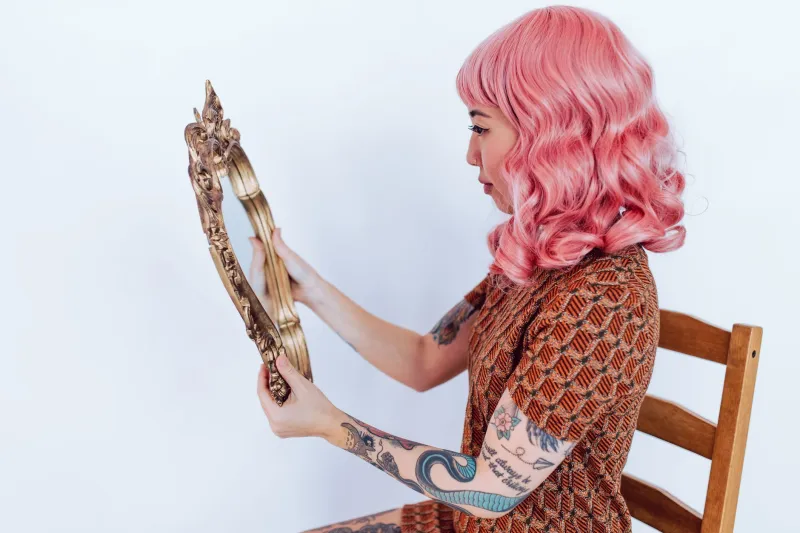
Every reflective surface you have ever consulted presents you with a reversed image of yourself. Your left side appears on the right; your right side appears on the left. This seems trivial until you consider that virtually no human face is perfectly symmetrical. The small asymmetries in your features — a slightly higher brow on one side, a subtly stronger jawline on the other — are flipped each time you look at your own reflection.
Over a lifetime of daily mirror use, your brain has constructed a mental model of your appearance built almost entirely on this reversed version of yourself. When a professional portrait presents your face as the rest of the world actually sees it — unreversed, unflipped — your brain registers a quiet but insistent alarm. Something is off, it reports. The image does not match the stored template. And so the portrait feels wrong, even when it is, by every objective measure, correct.
This is not a flaw in the photograph. It is a flaw in the mirror's silent contract with you.
What Your Phone Camera Is Actually Doing to Your Face
If the mirror's betrayal is one of orientation, the smartphone camera's betrayal is one of geometry. Most front-facing phone cameras are equipped with wide-angle lenses — typically in the range of 22 to 28mm equivalent focal length. These lenses are engineered to capture expansive environments in tight spaces, which makes them poorly suited for the intimate task of portraiture.
Wide-angle optics introduce what photographers call barrel distortion: features closest to the lens appear disproportionately enlarged relative to those farther away. When you hold a phone at arm's length to take a selfie, your nose, cheeks, and chin — the features nearest to the glass — are subtly but measurably exaggerated. Your ears may appear smaller. Your face may seem rounder or broader than it is in three-dimensional reality.
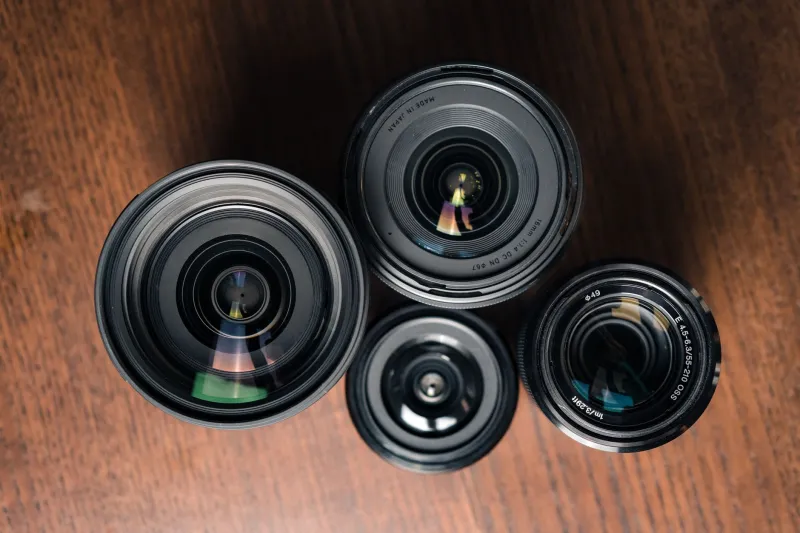
Professional portrait photographers, by contrast, typically work with longer focal lengths — 85mm, 105mm, and beyond. These lenses compress spatial relationships rather than exaggerating them, rendering facial features in proportions far closer to what the human eye perceives at a comfortable conversational distance. The result is a portrait that, paradoxically, looks less like a photograph and more like how another person actually sees you standing across a room.
The Mere Exposure Effect and the Comfort of the Familiar Wrong
Beyond optics lies psychology. In 1968, social psychologist Robert Zajonc documented what has since become one of the most replicated findings in behavioral science: people develop a preference for stimuli simply because they have been repeatedly exposed to them. He called it the mere exposure effect, and its implications for self-perception are profound.
You have looked at your mirror reflection thousands of times. You have scrolled through your own selfies hundreds of times. Your brain has been conditioned, through sheer repetition, to find those particular images not just familiar but correct — even aesthetically preferable. A professional portrait, however technically superior, however more accurate, arrives as an unfamiliar stimulus. And unfamiliar, in the emotional economy of the brain, often registers as wrong.
This is why clients who initially resist their professional portraits frequently come to prefer them after living with the images for several weeks. The mere exposure effect works in both directions. Given time, the accurate image becomes the comfortable one.
Lighting as a Shaping Force
There is a third dimension to this conversation that rarely receives adequate attention: light. The fluorescent overheads of a home bathroom, the harsh downward glow of a phone screen held below eye level, the flat ambient light of a home office — these are not neutral conditions. They cast shadows that flatten, highlight inconsistencies, and create a visual impression that is neither flattering nor particularly accurate.
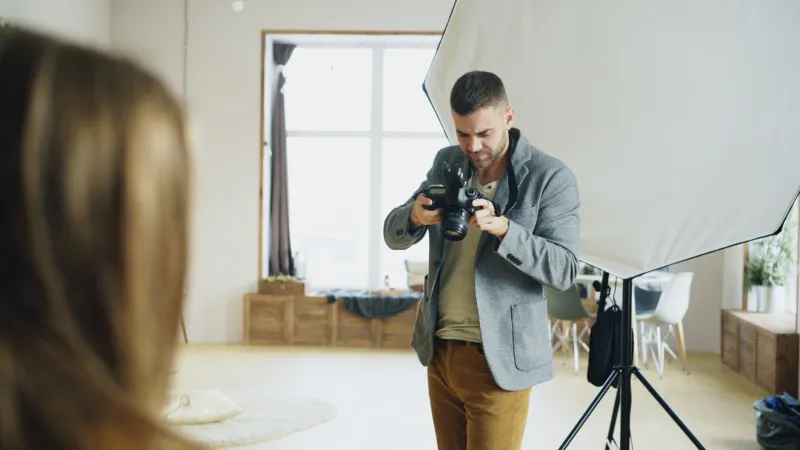
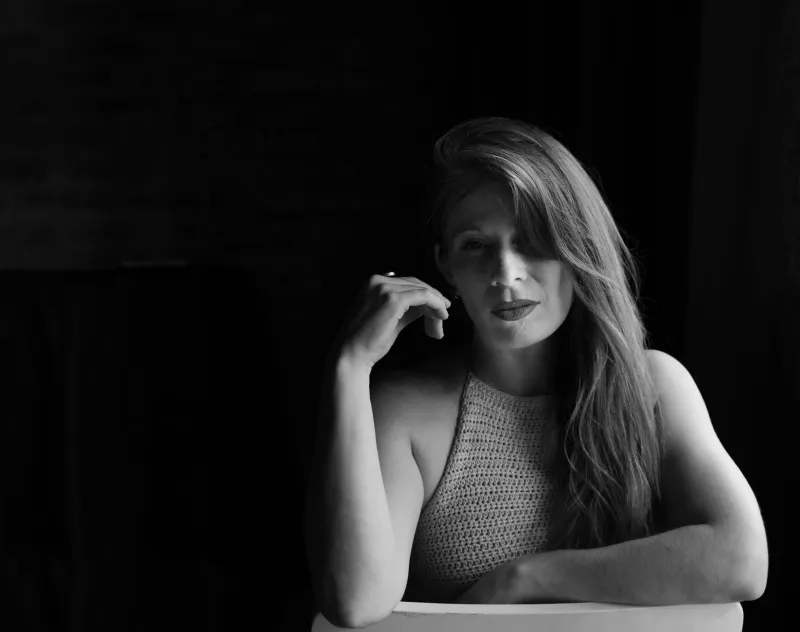
Professional portrait lighting is a discipline unto itself. Photographers invest years learning how light wraps around facial structure, how it can emphasize bone structure without creating harsh shadows, how it can bring warmth and dimension to skin tones that appear flat under ordinary conditions. When a client sees the result of that deliberate illumination for the first time, the face they encounter may seem almost unfamiliar in its clarity and depth — not because it has been altered, but because they have never seen themselves under conditions designed to reveal rather than obscure.
The Pose Variable
Selfies are, by their nature, self-directed. The angle is chosen instinctively, the expression rehearsed through trial and error over years of practice. Most people arrive at a default selfie pose — a slight chin tilt here, a favored three-quarter angle there — that they have unconsciously optimized for the distortions of a wide-angle lens. That pose, however comfortable, is engineered for the wrong instrument.
A skilled portrait photographer observes the subject's actual facial geometry and structures the session accordingly. The slight turn of the head, the precise elevation of the chin, the angle of the shoulders — these are not arbitrary aesthetic choices. They are technical responses to the real architecture of a real face, captured through optics designed for the purpose. The resulting portrait may show an angle you have never consciously chosen for yourself, which can make it feel unfamiliar even as it represents you more faithfully than any selfie ever has.
Learning to Trust the Photograph
The practical takeaway for anyone preparing for a professional portrait session — or struggling to accept the results of one — is this: the discomfort of unfamiliarity is not evidence of failure. It is evidence of accuracy.
The portrait is not the problem. The mirror, the phone camera, and decades of conditioned self-perception have collectively built an image in your mind that diverges from the image others actually encounter. A professional portrait collapses that gap. It shows you not as you have learned to see yourself, but as you genuinely appear to the colleagues, clients, collaborators, and strangers who form their impressions of you in the real world.
At Portraits & Co., this is precisely the work we consider most significant: not the production of a flattering fiction, but the careful, technically grounded revelation of who you already are. The portrait that makes you pause is often the one that is working hardest on your behalf — presenting the version of you that the world recognizes long before you do.