Against the Gray Backdrop: The Case for Photographing People Where They Actually Live

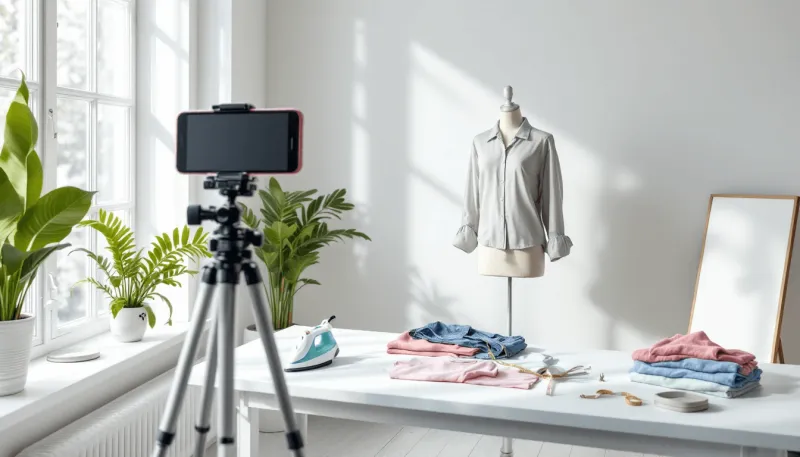
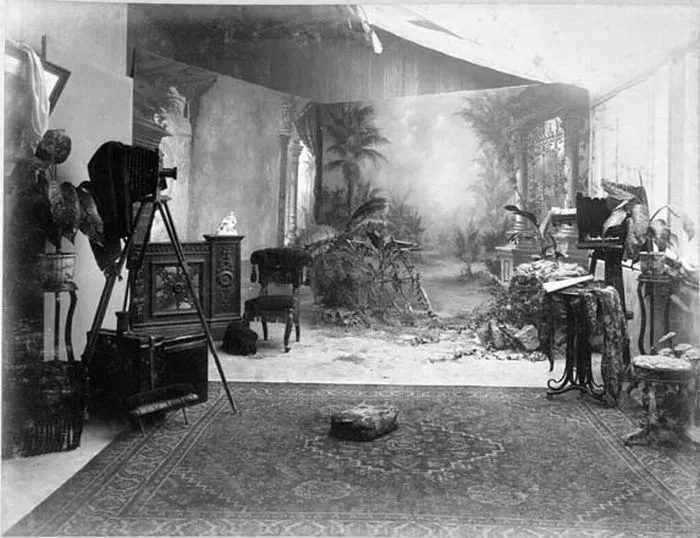
Photo: Tabercil, CC BY-SA 3.0, via Wikimedia Commons
There is a particular portrait that has colonized the American professional imagination: head and shoulders, softly lit, against a seamless backdrop in a gray so neutral it barely qualifies as a color. It is competent. It is inoffensive. And it is, for most professionals, the wrong choice.
The studio backdrop earned its dominance honestly. It is controllable, repeatable, and flattering, and for certain uses — a law firm's practice group page, a conference speaker grid — uniformity is the point. But somewhere along the way, control became the default rather than the option, and the profession lost sight of what a backdrop actually communicates: nothing. A gray sweep tells the viewer that the subject could be anyone, anywhere.
What Location Does to the Subject
Photographers who work on location describe a consistent phenomenon. Subjects arrive at a studio already performing — shoulders up, smile pre-loaded. The same subjects, photographed in their own workshop, at their favorite diner counter, or on the block where they've walked to work for a decade, relax within minutes. The environment does the warming up that a photographer would otherwise spend half the session attempting.
This is not sentiment; it is observable in the frames. Environmental sessions consistently produce a higher ratio of usable images, and the selected portraits tend to show looser hands and more responsive eyes. Familiarity is a lighting modifier no studio owns.
What Location Does to the Audience
The second effect is subtler but more consequential. Viewers process context as evidence. A portrait made in an actual kitchen tells the audience that the chef actually cooks. A portrait made beside the machinery tells them the engineer is near the work. Trust, in the American market especially, is heavily indexed on this kind of provenance — we are a culture skeptical of the polished and predisposed toward the verifiable.
A Decision Framework
Choose the studio when three conditions hold: the image must match a series of others, the subject is uncomfortable being photographed anywhere, or the final use is small-format and formal. Choose a location when the portrait needs to explain what the subject does, when the subject has a place they genuinely inhabit, or when the audience will encounter the image in a context — a personal site, a press feature — where story outperforms uniformity.
There is a middle path, too: bring the environment to the studio. A potter's wheel, a stack of case files, a well-worn guitar. Props are a compromise, but a useful one.
The gray backdrop will always have its place. It simply should not be the place everyone starts.