The Cost of a Flawless Frame: AI Retouching and the Credibility Threshold
Professional portraiture has always been an act of intervention. A photographer chooses the lens, shapes the light, and asks the subject to shift a shoulder by two inches. None of that is deception. It is presentation. The question facing portrait studios in 2026 is where presentation ends and fiction begins, especially as AI-driven retouching becomes less a specialty service than a default setting.
The stakes are higher than they may first appear. In the American market, a headshot often travels farther than a résumé. It appears on LinkedIn, in conference programs, on company leadership pages, and in the small circular frame beside an email. Each of those contexts asks the image to do a simple job: reassure strangers that the person behind the face is credible. Synthetic polish can help with that task, but only up to a point. Past that point, it starts to work against the very trust it was meant to secure.
Correction and Erasure Are Not the Same
Retouching has a long and legitimate history. Correcting a stray hair, balancing color, softening a harsh shadow, or removing a temporary blemish is closer to grooming than to reinvention. These adjustments acknowledge the conditions of photography without denying the person who stood before the camera. They are corrections in the ordinary sense: small repairs that bring the image closer to how the subject actually appears on a good day.
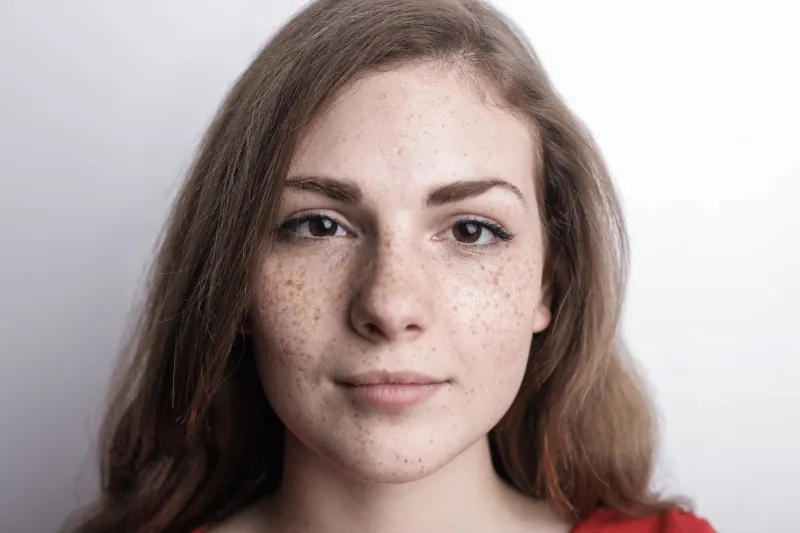
Erasure is different. It removes the evidence of a life. It smooths expression lines until the face loses its history. It reshapes the jaw, narrows the nose, lifts the brow, and evens the skin until the portrait no longer records a person but a composite of preferences. The result may be attractive in isolation. In public, it often reads as slightly unreal. Viewers may not be able to name the specific edit, but they register the absence of texture, asymmetry, and age. The face looks less like a person and more like a category.
How Viewers Detect Synthetic Polish
People are not forensic image analysts, but they are experienced face readers. Perception research consistently shows that humans are sensitive to subtle disruptions in skin texture, lighting logic, and facial proportion. A portrait can survive a great deal of retouching and still feel believable. What it cannot easily survive is inconsistency. When the skin is flawless but the eyes carry no catchlight, when the jaw is sharp but the neck shows no tension, when the background is soft but the hairline is razor-cut, the brain notices the mismatch even if the conscious mind does not.
The detection is often emotional rather than technical. A viewer may describe the image as stiff, overdone, or somehow not quite right. Those are not aesthetic complaints so much as trust signals. The portrait has crossed from presentation into performance, and the viewer senses that the person in the frame is being managed too heavily.
The Trust Ledger
Every portrait keeps a kind of ledger. On one side sits the impression of competence, care, and preparation. On the other sits the impression of authenticity, warmth, and approachability. Retouching can add to the first side, but it can also subtract from the second. A lightly corrected portrait says that the subject respects the occasion. A heavily synthesized portrait may say that the subject distrusts the camera, or the audience, or the ordinary evidence of being alive.
For professionals in client-facing roles, that ledger matters. A financial advisor, a therapist, a lawyer, or an executive is not selling a fantasy face. Each is selling judgment, presence, and reliability. A portrait that looks too perfect can create a small but persistent doubt: if the image has been corrected this aggressively, what else is being managed? The question is rarely conscious, but it is real.
A Practical Test for the Retouching Threshold
Before approving a retouched portrait, apply a three-part test. First, name the feature that was changed. If the answer is a temporary blemish, a stray hair, or a lighting flaw, the edit is likely correction. If the answer is a permanent feature, a decade of expression, or the basic architecture of the face, the edit is closer to erasure.
Second, ask whether the portrait still looks like the person on an ordinary Tuesday. Not the person after a week of sleep, not the person in a controlled studio, but the person a client would meet in a conference room. If the image would cause a moment of quiet recalibration in person, it has gone too far.
Third, view the portrait at thumbnail size. Most professional portraits are first encountered small: a profile picture, a search result, a speaker grid. At that scale, heavy retouching often becomes more visible, not less. The face loses its individual landmarks and begins to resemble a stock image. If the thumbnail version feels generic, the full-size version is probably overworked.
Where the Line Should Sit
At Portraits & Co., the standard is not flawlessness. It is legibility. A portrait should make the subject easier to read, not harder to believe. That means preserving the features that carry character and correcting only the distractions that interfere with the message. The goal is a face that looks prepared for the room it is entering, not a face that has never been in a room at all.
AI retouching is a powerful tool, and it is not going away. Used with restraint, it can help a portrait meet the visual standards of a professional market. Used without restraint, it can produce a synthetic smile that no one quite trusts. The difference is not a matter of technology. It is a matter of editorial judgment, and it belongs to the person whose face is on the line.