The Ancestral Template: How Family Photographs Quietly Direct the Face You Bring to Work
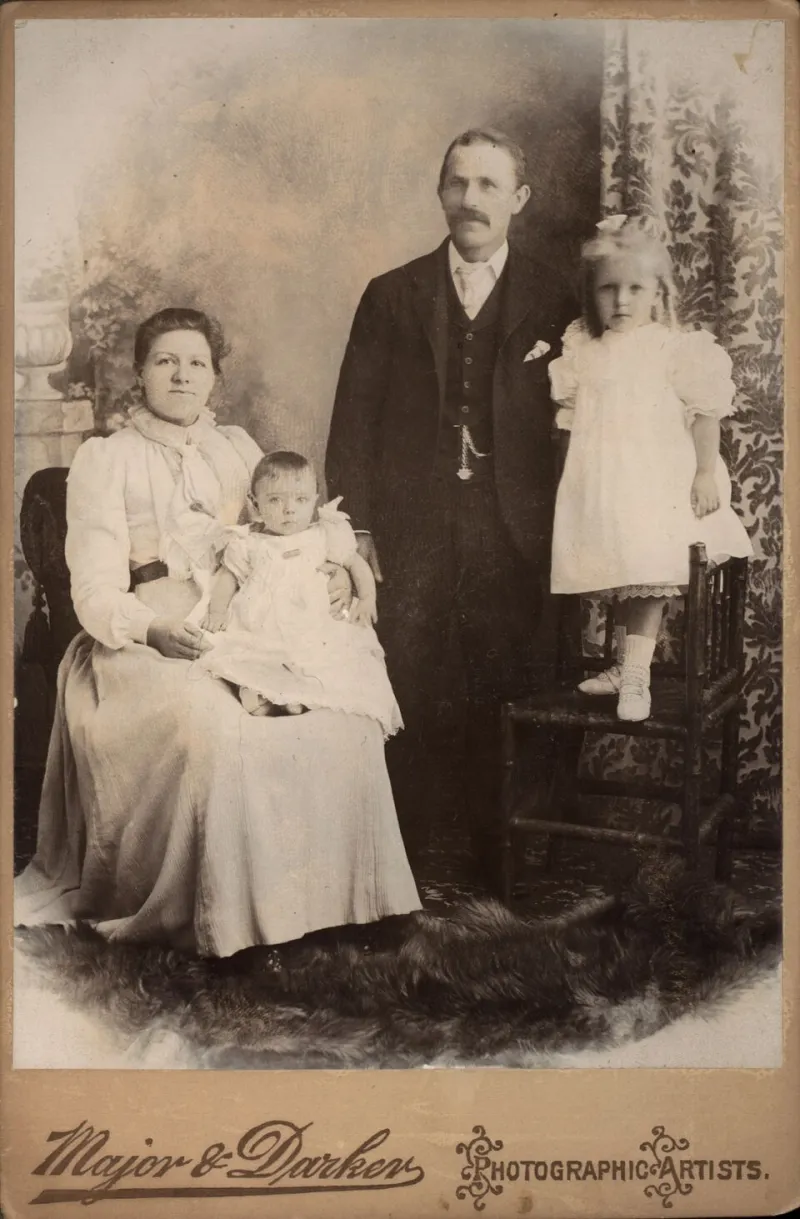
Photo: freeparking, CC BY 2.0, via Wikimedia Commons
Long before a client steps into a studio, the family album has already done its work. It has shown them what a serious face looks like, what a respectable posture costs, and which expressions were allowed at the dinner table. By the time someone asks for a professional portrait, they are not arriving empty. They are arriving with a template.
The template is rarely conscious. It may be a grandfather in a suit, a mother in a church directory photograph, or a childhood portrait from a department-store studio with a blue backdrop and a forced smile. These images are not just memories. They are instructions. They teach the eye what authority, warmth, dignity, and belonging are supposed to look like.
The First Studio We Ever Saw
For many Americans, the first professional portrait they encounter is a family photograph. It might be a formal studio sitting, a wedding portrait, an immigration photograph, or a school picture ordered in multiples. These images often carry a strong visual code: the shoulders square, the chin level, the mouth closed or carefully curved. The code varies by family, region, and class, but its function is consistent. It tells the child: this is how we present ourselves when the occasion matters.
That early instruction can be powerful. A person who grew up with formal family portraits may associate professionalism with restraint. A person who grew up with candid photographs may associate credibility with ease. Neither association is wrong. Each is a learned preference, and each can shape what a client wants from a portrait session without ever being spoken aloud.
What Gets Inherited
Inherited cues are not limited to clothing and posture. They include the emotional temperature of the face. Some families photograph well when they look stern; others photograph well when they look lively. Some households treat a direct gaze as confidence; others treat it as confrontation. Some people inherit a habit of tilting the head slightly, a gesture that once helped a parent look attentive and now helps a client look approachable, whether they know it or not.
There is also the question of what was missing from the album. A client who has no family portraits may approach the camera with a kind of blankness, unsure what a professional face is supposed to do. A client whose family portraits were always tense may associate the studio with obligation rather than pride. These histories do not need to be dramatized in the session, but they do need to be understood.
Recreate or Rebel
Clients tend to do one of two things with the ancestral template. Some try to recreate it. They want the same kind of authority their father projected, the same warmth their mother carried, or the same sense of belonging they remember from a family photograph on the living room wall. The result can be a portrait that feels borrowed rather than inhabited.
Others rebel. They arrive determined not to look like the family image they grew up with. They refuse the suit, the closed mouth, or the formal backdrop. The rebellion is often healthy, but it can also be reactive. A portrait should be chosen, not merely opposed. The goal is not to avoid an inherited template but to decide which parts of it still serve the person in front of the camera.
Surfacing the Template Before the Shutter Clicks
A good portrait photographer does not need to become a family therapist. But a good portrait photographer does need to ask better questions. Before the session, ask what a professional portrait looked like in the client's household. Ask who was considered photogenic and why. Ask whether the client has ever seen a portrait of themselves that felt completely true. The answers will often reveal more than a wardrobe consultation.
During the session, watch for the moment the client settles into a familiar pose that does not quite fit them. That pose may be the template. It may also be a form of protection. A photographer can gently test alternatives without turning the session into an interrogation. The purpose is not to expose the family album. It is to make sure the final portrait belongs to the client, not to an inherited idea of what a credible face should be.
The Portrait as a Conversation
Every portrait is a conversation between the person, the camera, and the visual history they carry. The family album is one voice in that conversation, and often a louder one than anyone expects. Recognizing it does not diminish the client's individuality. It clarifies it.
The most convincing professional portraits are not the ones that reject the past or replay it. They are the ones that acknowledge the template and then make a deliberate choice about what to keep. That choice is what turns a family resemblance into a personal identity, and a portrait into something the client can finally recognize as their own.