The Image You Never Art-Direct: Rethinking the Workplace Badge Portrait
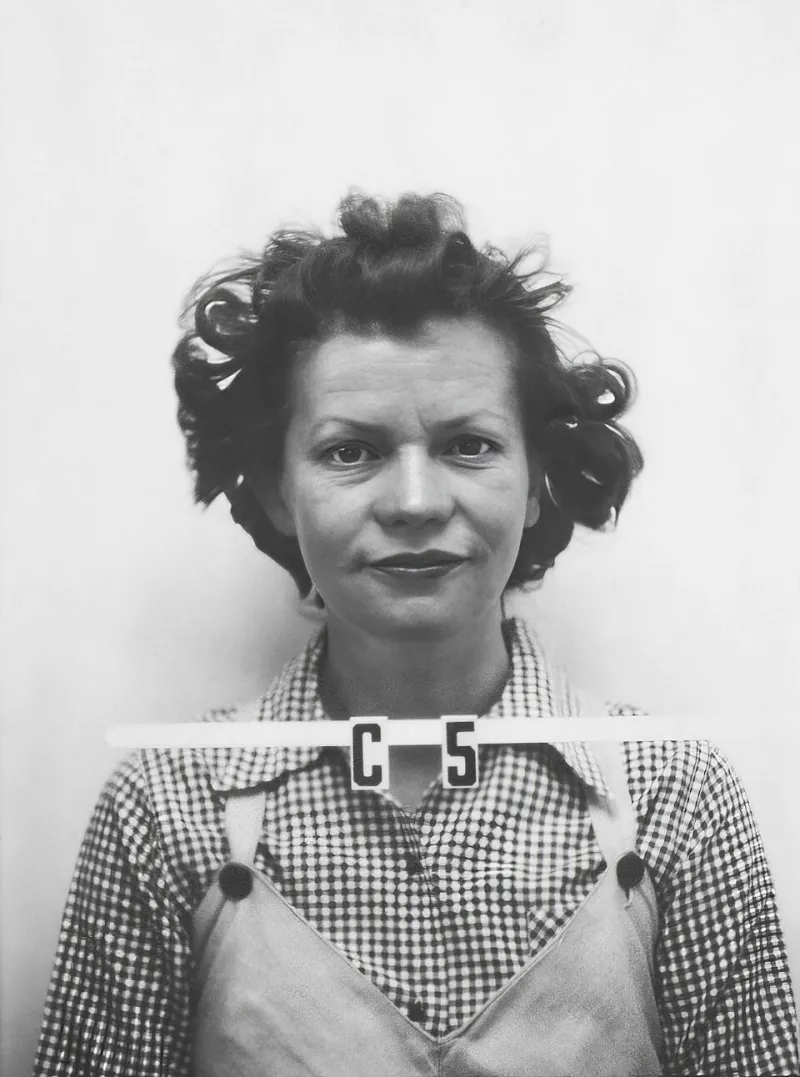
Photo: Los Alamos Laboratory, Attribution, via Wikimedia Commons
Every organization has a portrait that is seen more often than the annual report cover and receives less attention than the office coffee order. It is the badge photograph. It appears at the security desk, in the internal directory, on the building-access system, beside email signatures, and sometimes in the conference room display before a video call begins. It is the most reproduced image of a working person, and it is almost never art-directed.
The Most-Reproduced Portrait in the Building
The badge portrait occupies a peculiar place in American institutional life. It is not a formal portrait, not a candid, and not quite a branding image. It is a functional record that becomes a daily interface. Colleagues learn a face through it before they learn a voice. Security staff match it to a person at the door. New employees see it in the directory before they know whom to ask for help.
Because the badge is functional, it is often treated as a bureaucratic necessity. The process is fast, the lighting is flat, and the expression is whatever the subject happened to produce when the camera was raised. The result is an image that says little beyond the fact of employment. Yet the badge is also a cultural artifact. It records how an institution presents its people to one another, and it becomes part of the memory of a workplace long after the person has moved on.
Why Badge Photos Drift Institutional
The common mistakes are familiar. A flash fired directly at the face. A blue-gray backdrop that flattens every complexion. A camera angle slightly above or below the eye. A forced smile that arrives a half-second too late. A wardrobe choice that belonged to a previous season or a previous role. None of these errors is dramatic on its own. Together they produce an image that feels institutional rather than human.
The institutional look is not caused by bad intentions. It is caused by process. Badge photography is usually scheduled in a hallway or a conference room, with a line of people waiting and a technician who has five minutes per person. The priority is consistency and speed. The result is consistent, but it is often not credible as a portrait.
Trust at the Turnstile
A badge portrait has a specific job: recognition. It must allow a person to be identified quickly and reliably. But recognition is not only a matter of facial features. It is also a matter of trust. A badge image that looks tense, hostile, or utterly blank creates a small friction every time it is seen. A badge image that looks approachable and awake reduces that friction.
This matters most at the beginning of a working relationship. A new employee whose badge photo looks human is easier to greet. A long-tenured employee whose badge photo is a decade old becomes a small administrative puzzle. The badge is not a glamour portrait, and it should not try to be. It should be a credible likeness with enough warmth to function as a social introduction.
A Lightweight Process
Treating the badge as a brand asset does not require a full editorial shoot. It requires a modest amount of intention. A ten-minute session with natural window light, a simple background, and a camera at eye level will already improve most badge programs. The subject should be given a moment to settle before the shutter is pressed. Two frames are useful: one neutral and one with a slight smile. The neutral frame often works better for security systems; the warmer frame often works better for directories.
Wardrobe should be simple and current. A collar or clean neckline reads well at small sizes. Busy patterns and reflective fabrics do not. Over-retouching should be avoided, because the badge must remain recognizable at the door. The goal is not flawlessness. The goal is a likeness that can be trusted.
Organizations can also establish a review cadence. A badge portrait should be updated every three to five years, or after a significant change in role or appearance. The update should be communicated as a normal part of professional maintenance rather than a correction. When people understand that the image is meant to help them be recognized and remembered, they tend to approach the session with less resistance.
The Human Threshold
The badge portrait sits at a threshold. It is the image that lets a person into a building and the image that lets colleagues into a working relationship. It is rarely framed, rarely lit with care, and rarely discussed. Yet it carries the daily work of recognition.
A good badge photograph does not need to be beautiful in the way a campaign portrait is beautiful. It needs to be clear, current, and quietly human. In a workplace culture that increasingly depends on visual identity, the least-styled portrait may be the one that says the most about how an institution sees its people.